
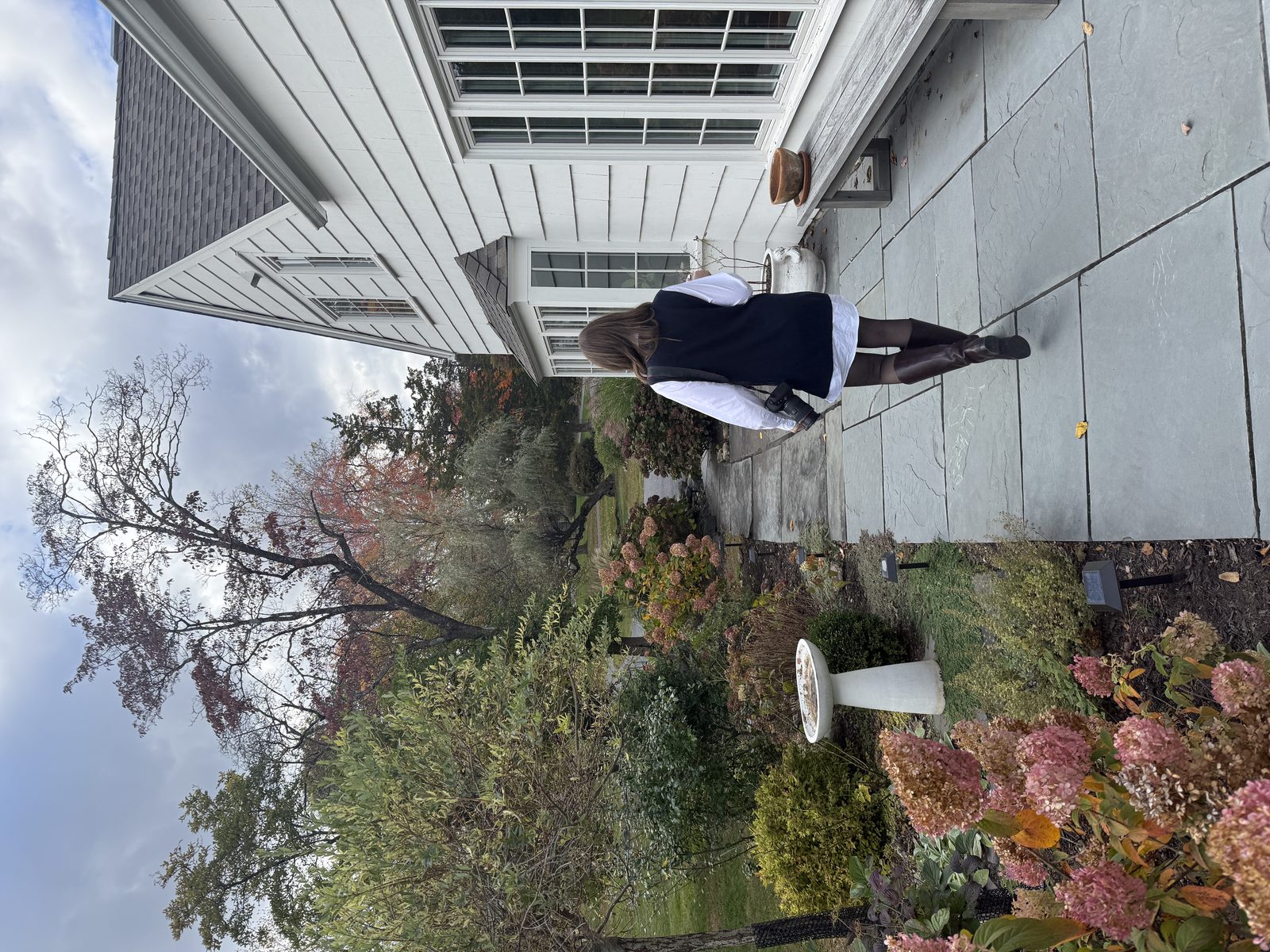
A bluestone terrace is not the same specification as a bluestone walk. The terrace is a destination — a place to sit, to gather, to look out from. Its scale is larger. Its relationship to the house and the landscape requires more consideration. And the specific decisions about joint width, finish, and pattern have more visual consequence at terrace scale than they do on a narrow walk.
The best bluestone terraces read as horizontal planes that are part of the landscape, not applied to it. The stone is thick enough — 1.5 to 2 inches — to have presence. The joints are tight. The pattern is either irregular (the natural variation of random-set bluestone) or ashlar (a more formal rectangular pattern with consistent joint lines). The color of the stone harmonizes with the grey-green of New England plantings and the grey of granite and cedar.
Bluestone terrace paving is Pennsylvania or New York bluestone, thermal or natural cleft finish, in irregular or ashlar patterns, minimum 1.5" thick. Irregular patterns use random-shaped pieces set with tight joints (3/8" to 1/2"). Ashlar patterns use rectangular pieces in a running bond or other regular pattern. The base is 4 to 6 inches of compacted crushed stone over undisturbed or compacted subgrade.
Bluestone terrace paving behaves well in New England conditions when correctly installed. The primary failure mode is frost heave — individual stones rising as the base material freezes. This is almost always a drainage problem: water collecting under the stones has no path to drain, saturates the base, and heaves with frost.
Bluestone is the dominant paving stone of traditional New England terraces and gardens for the same reason it is correct for walks: it is the regional stone, quarried in the Northeast, and it weathers in a way that connects the paving to the surrounding landscape.
From stone yards. For a terrace, order slightly more than calculated — 10% overage is standard for irregular patterns, 5% for ashlar. Specify finish (thermal or natural cleft), pattern (irregular or ashlar), and thickness (1.5" minimum). Confirm domestic origin — Pennsylvania or New York bluestone.
Pennsylvania or New York bluestone, thermal or natural cleft finish, 1.5" minimum thickness, irregular or ashlar pattern, for terraces at traditional New England residential properties. Four-inch compacted crushed stone base (not crusher run) with positive drainage. Joints filled with stone dust or left open for planting. No imported blue limestone. The terrace reads with the landscape when the stone comes from the landscape.
Something missing from the archive?
Suggest a material →