
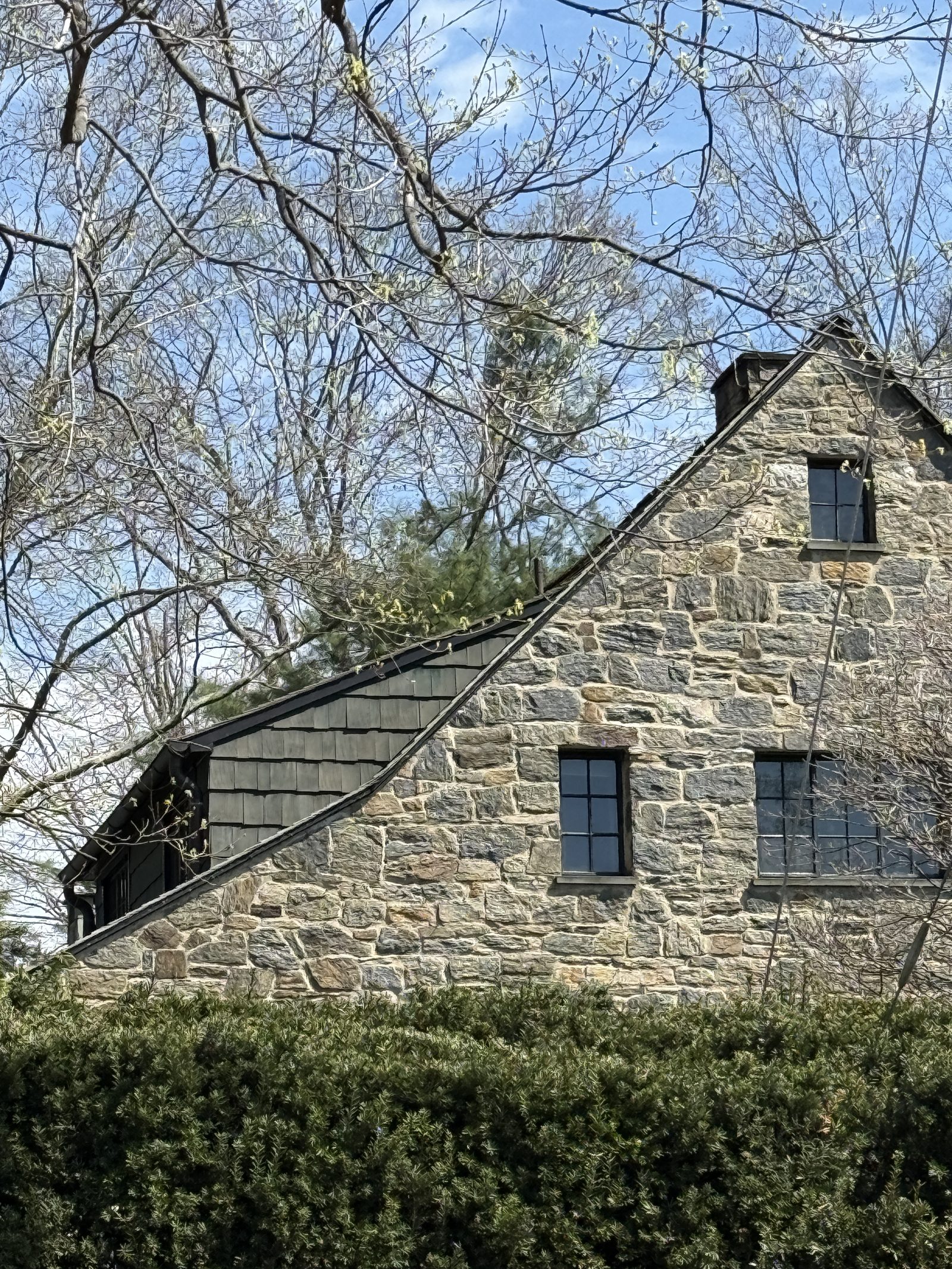
Climbing hydrangea is the one vine that makes a stone wall more beautiful without damaging it. It attaches by aerial rootlets — small, cork-like holdfasts that grip the stone surface without penetrating the mortar joints. It blooms in June with white lacecap flowers against dark green leaves. In winter the exfoliating bark and horizontal branching structure read as architecture against the stone. It is slow. It is worth waiting for.
A mature climbing hydrangea on a stone wall is one of the most beautiful combinations in the New England landscape. The dark, lustrous green leaves cover the stone from late spring through fall. The white lacecap flowers in June are held slightly away from the wall on horizontal branches, visible against the stone behind them. In winter, the cinnamon-brown exfoliating bark of the main stems and the horizontal branching of the secondary structure read as a drawing against the stone face.
Climbing hydrangea (Hydrangea anomala subsp. petiolaris) is a deciduous woody vine native to China and Japan, fully cold-hardy in New England. It climbs by aerial rootlets — not twining, not tendril-gripping, not clinging by suction like English ivy — that grip the surface without penetrating it. Growth is slow for the first three years while roots establish; once established, it grows vigorously. A mature plant can reach 60 to 80 feet.
The "three years sleeping, two years creeping, one year leaping" rule applies exactly to climbing hydrangea. Do not be discouraged by slow early growth. By year five to seven the plant begins to cover significant wall area. By year ten it is a landscape feature. The aerial rootlets do not damage sound masonry — they grip the surface without penetrating.
Climbing hydrangea is the correct vine for masonry on traditional New England properties because it does not damage the masonry, it is four-season ornamental, it is cold-hardy without protection, and it requires no support system. English ivy, by contrast, penetrates mortar joints with its rootlets and damages masonry over time.
From native plant nurseries and general landscape nurseries — climbing hydrangea is more widely available than most specialty plants. Plant in spring. Choose a location with at least partial sun — full shade produces foliage but few flowers. The wall or structure it will climb must be sound — repair any deteriorated mortar before planting.
Climbing hydrangea (Hydrangea anomala subsp. petiolaris) on sound masonry walls, stone foundations, and chimneys at traditional New England properties. No support system required. Plant in spring in partial to full sun for best flowering. Allow five to seven years for establishment. Do not attempt to control the growth by heavy pruning in early years. Patience is the specification.
Something missing from the archive?
Suggest a material →