
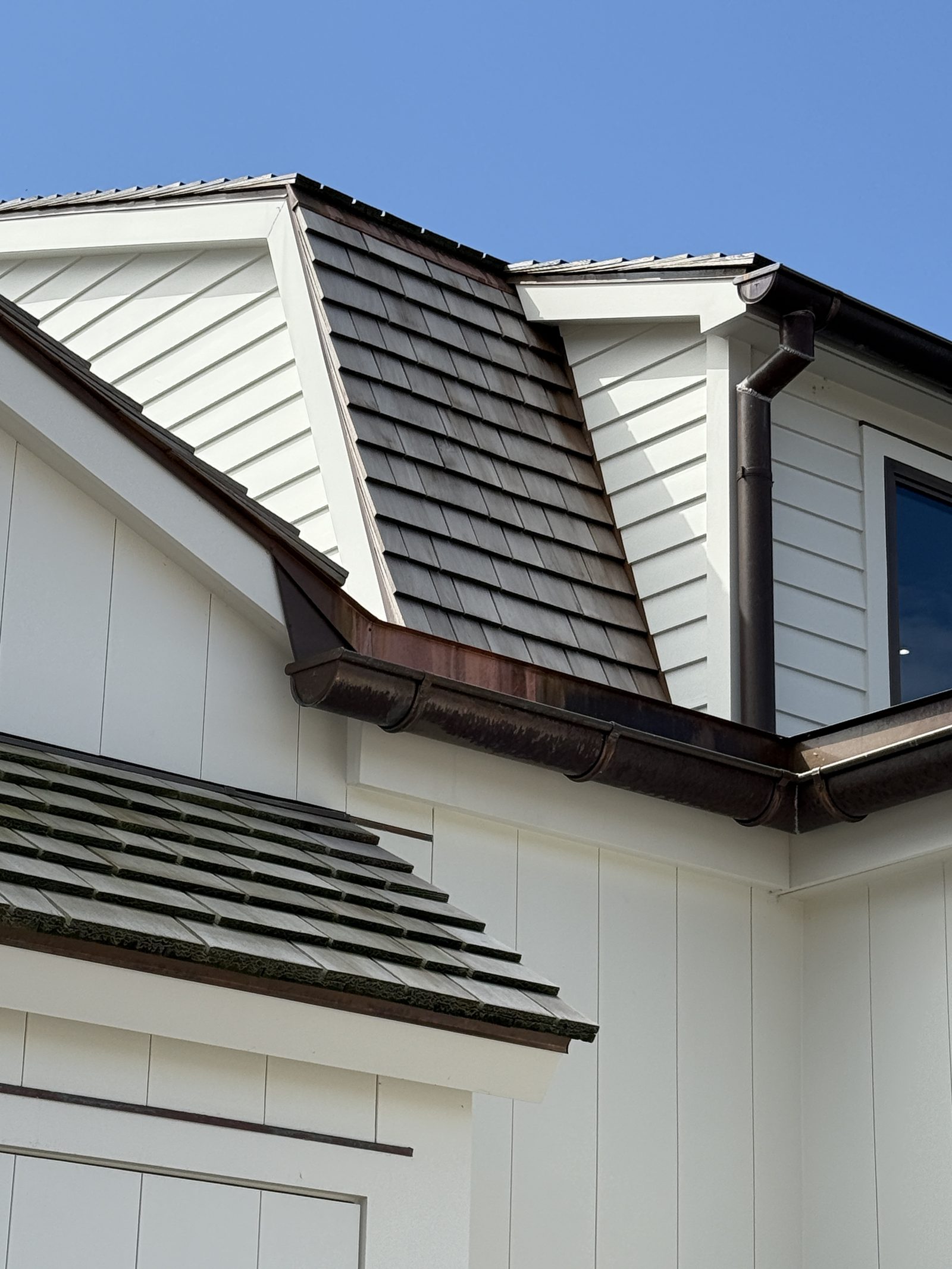
The existing copper entry covers flashing, gutters, and downspouts. This entry is about copper as a primary roofing material — the standing seam copper roof on a tower or dormer, the copper flat roof over a bay window or porch, the copper mansard on a Victorian house. These are different applications, different specifications, and different installation systems. The material is the same. The work is not.
The standing seam copper roof is identified by its parallel ribs running vertically down the roof slope, each seam a mechanical lock between two copper panels. New, it is the bright penny-copper color. Over years, it browns, then darkens to near-black, then, in coastal or humid conditions, begins to develop the green verdigris that is the most recognizable patina in architecture.
Standing seam copper roofing uses 16-ounce (nominal) or 20-ounce cold-rolled copper sheet, formed into panels with standing seams at 12" to 18" spacing. The panels are attached to the substrate with concealed cleats that allow thermal movement. For flat roof and low-slope applications, copper is installed in a batten seam or flat-locked system with soldered joints. Flat roof copper requires 20-ounce material minimum. The substrate is typically solid wood sheathing.
Copper roofing expands and contracts significantly with temperature change. The installation system must accommodate this movement through concealed floating cleats, not fixed fasteners. Copper that is restrained from moving will develop stress cracks at fixed points. Correctly installed, a copper roof lasts 100 years or more. The patina is self-protective — the verdigris is a stable copper carbonate that seals the surface against further corrosion.
Copper is the historically correct roofing material for towers, dormers, bays, porches, and low-slope roof sections on traditional New England buildings from the Federal period onward. On the right building, it is the correct specification. None of the alternatives develops the patina of copper or has the documented service life.
Through architectural sheet metal contractors who specialize in copper roofing. Specify 16-ounce copper for standing seam slopes, 20-ounce for flat and low-slope applications. Confirm the substrate is solid wood board sheathing, not engineered wood panels.
Sixteen-ounce cold-rolled copper, standing seam with concealed floating cleats at 16-inch panel width, for sloped copper roofing on traditional New England residential buildings. Twenty-ounce for flat and low-slope applications with soldered seams. Solid wood board substrate only. Work by a sheet metal contractor with documented copper roofing experience. The service life of correctly installed copper roofing is measured in generations.
Something missing from the archive?
Suggest a material →