
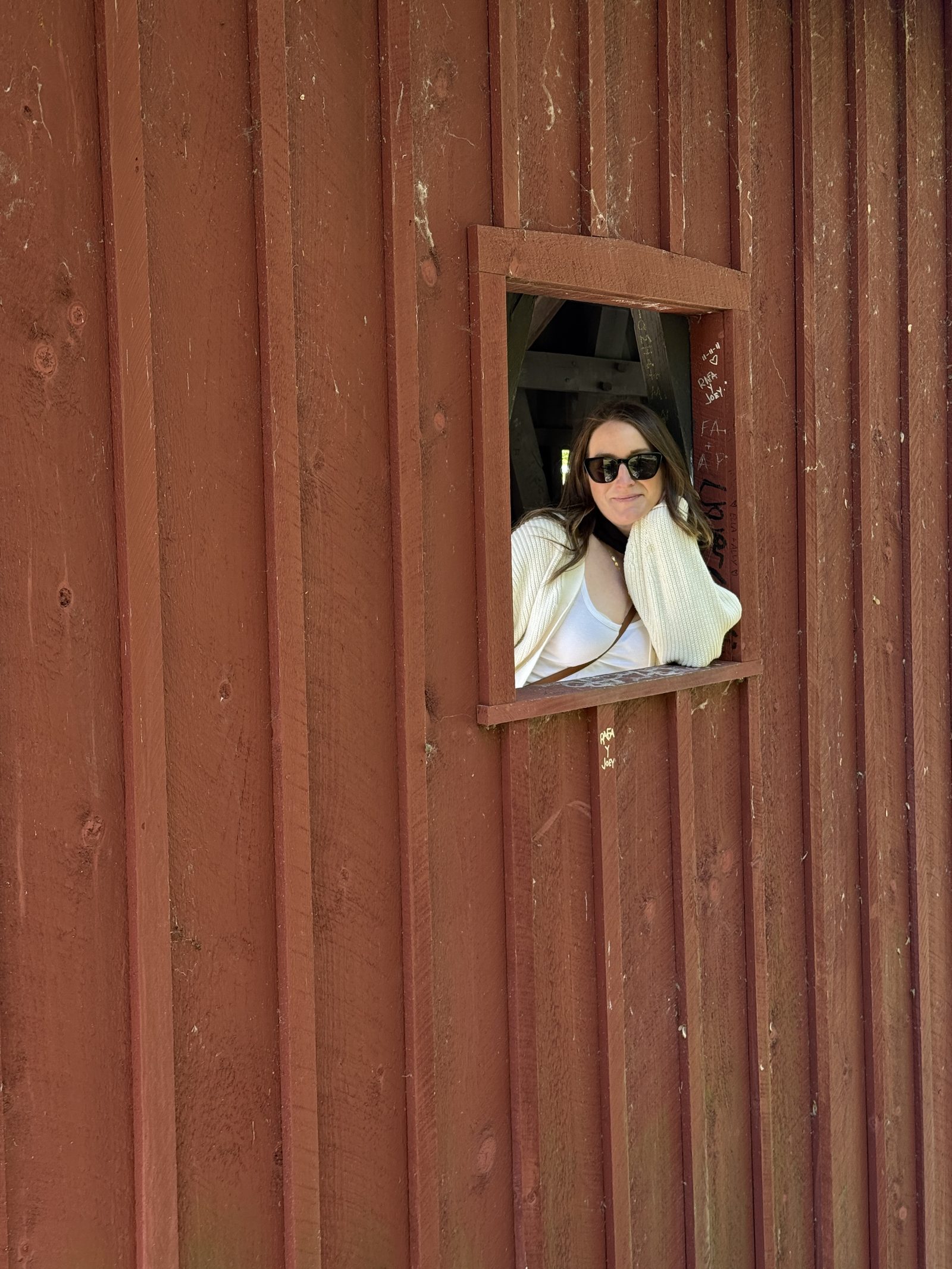
Board and batten is the siding of the working building — the barn, the outbuilding, the carriage house, the garden shed. It came to domestic architecture from agricultural architecture, and the best domestic uses of it retain that quality: something built to work, built to last, not built to impress. A board and batten house that is trying too hard to look like a farmhouse is immediately legible as something else. The material does not forgive pretension.
Board and batten reads as vertical where clapboard reads as horizontal, and this changes the character of a building entirely. A board and batten barn seems to reach toward the roof. The lines draw the eye up rather than across. In a landscape context, particularly against the horizontal lines of a stone wall or a meadow, board and batten makes a building feel taller, more upright, more present than its actual dimensions suggest.
The shadow of the batten over the board — that narrow vertical strip of darkness — is the visual signature of the material. In afternoon light it defines the rhythm of the wall the way the shadow line of clapboard defines a horizontal wall. Get the proportion right and the wall has life. Get it wrong and it looks like paneling.
Board and batten is exactly what the name describes. Wide vertical boards are nailed to the framing with a gap between them. Narrower strips of wood, the battens, are nailed over those gaps to cover them. The boards are typically 8 to 12 inches wide. The battens are typically 2 to 3 inches wide. The gap between boards, which the batten covers, is typically 1/2 to 3/4 inch — enough to allow for wood movement without the boards cupping against each other.
Eastern white cedar is the correct species for traditional New England board and batten. It is what the barns were built from, and it weathers the same way as cedar shingle siding — from pale straw through the mottled first years to the eventual silver-grey that reads as completely of the region. Pine is historically used and acceptable but requires paint to perform, while cedar can be left to weather naturally. Rough-sawn cedar has a texture and a quality of surface that dressed lumber does not, and on an agricultural building or its domestic descendants, rough-sawn is almost always the right choice.
Wood moves. This is the central fact of board and batten construction and the reason the system was developed in the first place. Wide boards on a building will expand and contract across their width with seasonal moisture changes. If those boards are edge-nailed against each other with no room to move, they will cup, split, and fail. The gap between boards, covered by the batten, accommodates this movement. The batten is nailed only through its center, not at its edges, so the boards beneath it can move freely.
Left unfinished, eastern white cedar board and batten will weather to the same silver-grey as cedar shingles, on a similar timeline. Painted, it holds paint well because the vertical orientation sheds water effectively and the boards dry quickly after rain. Stained, it takes stain evenly and the rough-sawn texture holds it longer than dressed lumber would.
Board and batten is right on barns, carriage houses, garden buildings, and the houses that take their design cue from agricultural tradition. It is wrong on Federal period houses, Greek Revival houses, and any building whose architecture is defined by horizontal coursing. The material has a character and a history, and that history is agricultural. Using it correctly means understanding where it comes from.
The contemporary version of board and batten, with narrow boards and very wide battens rendered in fiber cement or engineered wood, is a different material making a different statement. It may be appropriate on contemporary buildings. It is not the same thing as traditional board and batten and should not be specified as if it were.
Specify eastern white cedar, rough-sawn, boards 8 to 12 inches wide, battens 2 to 3 inches wide. Gap between boards 1/2 to 3/4 inch. Boards face-nailed with two nails per bearing. Battens center-nailed with one nail per bearing to allow board movement. All cut ends primed before installation if painted finish is intended.
For natural weathering, no finish required. For painted finish, linseed oil primer on all surfaces before installation, two coats exterior finish paint. Color should be consistent with the agricultural tradition of the building — dark red, deep green, black, and warm grey are all historically appropriate. Bright white on board and batten reads as contemporary rather than traditional.
Eastern white cedar, rough-sawn, boards 8 to 12 inches wide, battens 2 to 3 inches wide, gap between boards 1/2 to 3/4 inch. Boards face-nailed, battens center-nailed to allow movement. Unfinished for natural weathering or linseed oil primer plus paint for painted finish. Agricultural colors — dark red, green, black, warm grey — are historically appropriate. Bright white is not.
Something missing from the archive?
Suggest a material →