
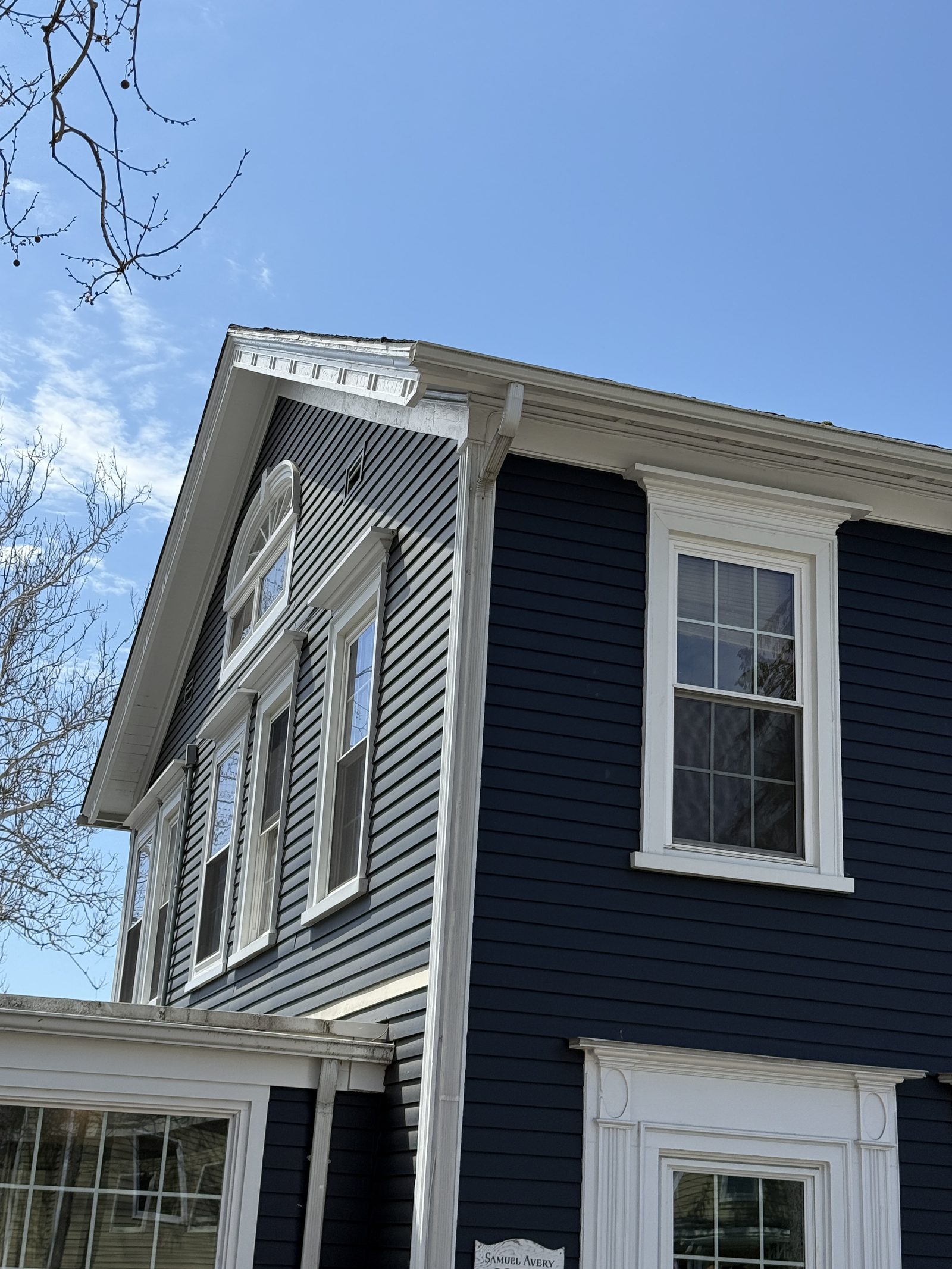
Before hung copper and aluminum gutters became standard, many New England buildings — particularly Greek Revival and Italianate houses with wide, elaborate cornices — used built-in wood gutters: a trough formed directly into the cornice or eave structure, lined with metal, that carried water to downspouts without a visible hung gutter interrupting the cornice line. They are elegant when working and catastrophic when neglected.
A built-in gutter is invisible from the ground — the cornice presents a continuous, uninterrupted line with no separate gutter component visible. The trough is hidden within the cornice profile itself, typically lined with copper, lead-coated copper, or historically, lead sheet, sometimes with later replacements in rubber membrane or modern synthetic liners.
The wood structure of a built-in gutter is typically heavy framing built into the cornice, sloped toward downspout outlets, lined with a waterproof metal membrane that turns up the sides and is sealed at all penetrations. Modern relining uses 16 to 20-ounce copper or an EPDM membrane system, depending on the specific cornice geometry and budget.
Built-in gutters fail catastrophically and expensively compared to hung gutters, because the failure happens inside the building structure rather than visibly outside it. A failed liner allows water directly into the cornice framing, fascia, and often the wall structure below, causing extensive rot before the problem becomes visible from inside or outside.
Built-in gutters are correct only where they already exist as an original architectural feature — they are not a system to retrofit onto a building that did not originally have them. On a building with an original built-in gutter system, maintaining and correctly relining it preserves an important architectural detail that a hung gutter would compromise.
Relining requires a roofing or sheet metal contractor with specific built-in gutter experience — this is a specialized repair, not a standard roofing task. Inspect built-in gutters annually and budget for liner replacement on a 20 to 30 year cycle depending on material.
Sixteen to twenty-ounce copper relining, fully soldered with proper slope to downspout outlets, for built-in wood gutters on Greek Revival, Italianate, and other traditional New England buildings with original concealed gutter cornices. Annual inspection is mandatory — concealed failures cause extensive hidden damage before becoming visible.
Something missing from the archive?
Suggest a material →