
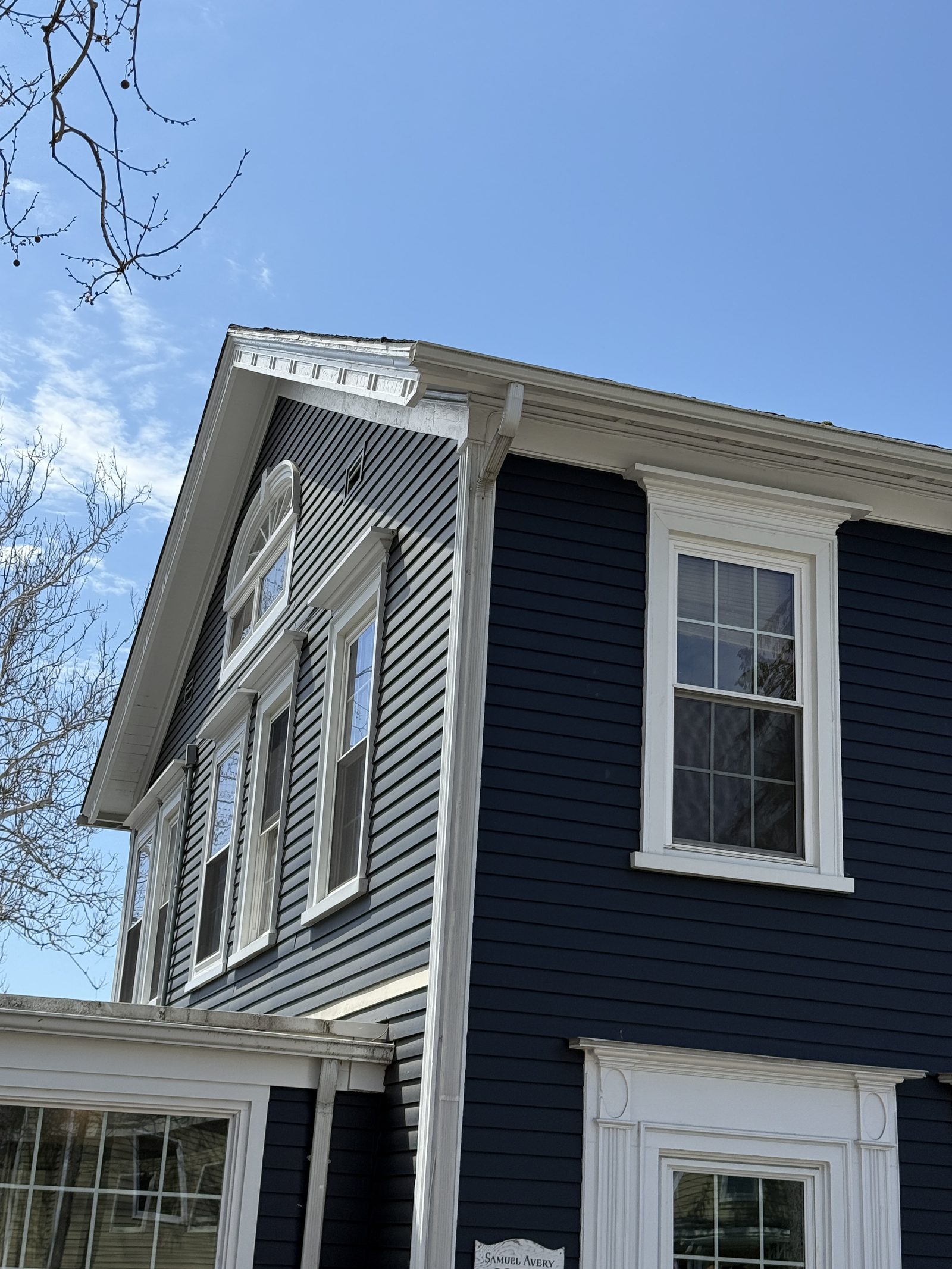
Two things are called putty on a traditional New England building. One is glazing compound — the material that holds glass in a wood sash and seals the joint between glass and wood. The other is wood filler — the material that fills nail holes, checks, and minor defects in exterior wood before painting. They are different materials used for different purposes, and substituting one for the other produces failures that are visible within a season.
Glazing compound, correctly applied, forms a smooth triangular bead between the glass and the wood rebate, painted flush with the glass. It is smooth, matte when painted, and invisible when the sash is painted. Wood filler, correctly applied and sanded, disappears into the painted surface. Both are maintenance materials — they fail on a cycle and need renewal. The cycle for glazing is 15 to 20 years. The cycle for painted wood filler is determined by the paint cycle.
Glazing compound: Sarco Type M linseed oil glazing compound is the traditional and correct product for wood sash reglazing. It remains slightly flexible as it cures, bonds to both glass and wood, and accepts paint correctly. Latex glazing compounds do not bond as durably. Wood filler: for small defects, an oil-based exterior wood putty such as Minwax Wood Filler or DAP Plastic Wood in an oil formula. For larger repairs and rot consolidation, a two-part epoxy system — Abatron LiquidWood consolidant and WoodEpox filler — is the correct approach.
Linseed oil glazing compound skins over in a few days and continues curing for weeks to months. It should be primed and painted within two weeks of application — unpainted glazing compound does not cure correctly and becomes chalky. Epoxy wood filler is essentially permanent — it does not shrink, crack, or absorb moisture, which is why it is correct for structural repairs.
These are the maintenance materials that keep traditional wood buildings performing correctly. A window sash reglazed with linseed oil compound and painted correctly will last another 20 years without further attention. An epoxy-repaired sill or casing, primed and painted, is more durable than the original wood in the repaired area.
Sarco Type M glazing compound from glass suppliers and specialty paint dealers. Abatron LiquidWood and WoodEpox from preservation product suppliers and some paint stores.
Sarco Type M linseed oil glazing compound for window sash reglazing. Abatron LiquidWood consolidant and WoodEpox filler for structural wood repair. Oil-based exterior wood putty for minor defects and nail holes. Prime all repaired surfaces within two weeks of application. These are maintenance materials, not cosmetic ones. Applied correctly they extend the life of the building.
Something missing from the archive?
Suggest a material →