
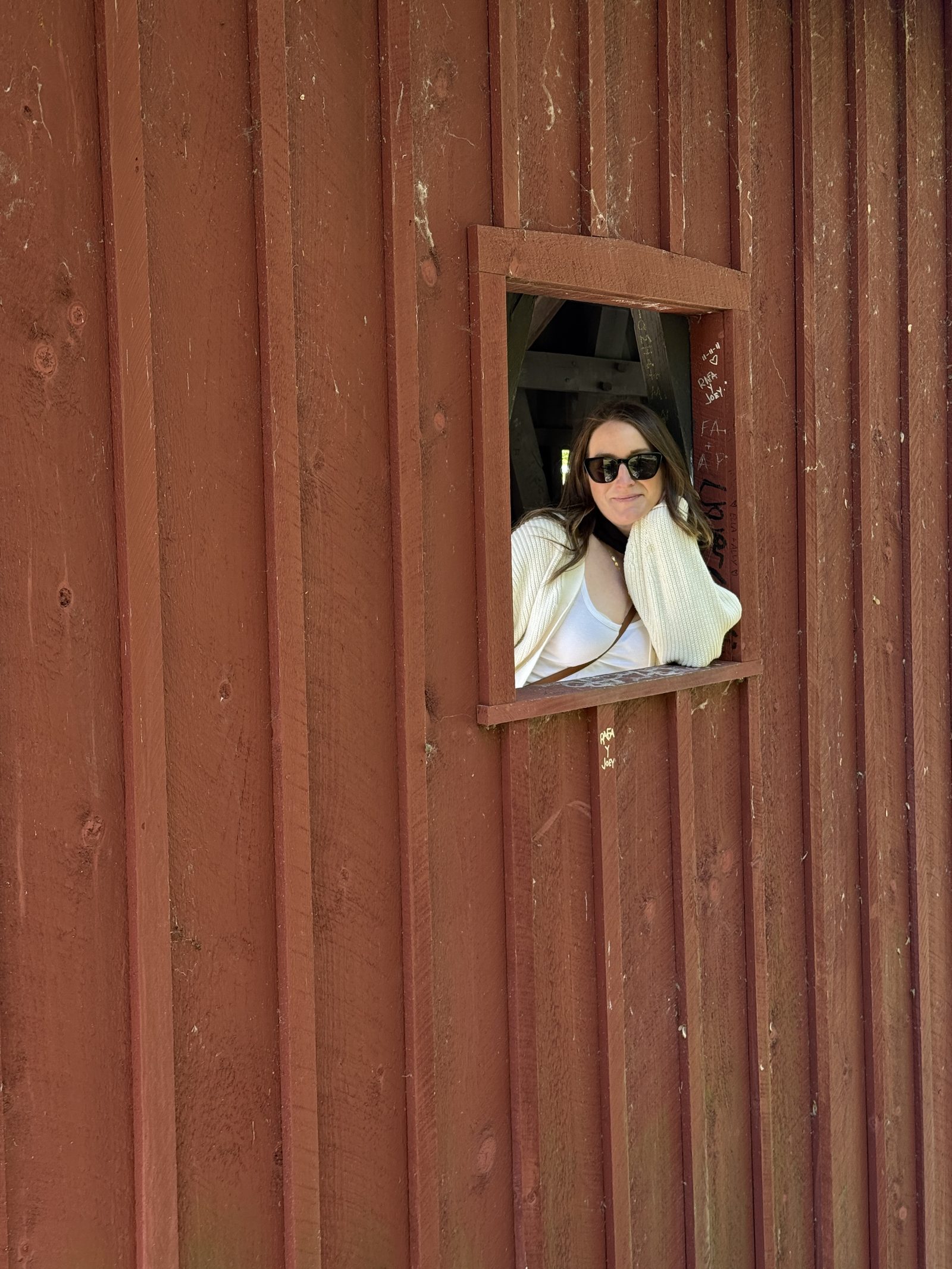
Eastern hemlock framed a significant portion of the pre-industrial building stock of New England. It is not a glamorous wood. It is not as rot-resistant as locust, not as workable as pine, not as clear-grained as cedar. What it is, and has always been, is abundant, strong, and honest. Hemlock framing, rough-sawn from regional mills, is the correct material for outbuildings, barns, fencing, and utilitarian structures where the structural work is what matters and the finish is secondary.
Pale pinkish-tan to light brown, with a slightly coarser grain than white pine. It has a faint reddish tinge in fresh-cut material. It is harder than pine, which means it holds fasteners well and resists surface abrasion. Rough-sawn hemlock has a texture that is distinct from dressed lumber — slightly fuzzy on the surface, with the saw marks visible. Left exterior without finish, it weathers to grey-silver more quickly than cedar.
Eastern hemlock (Tsuga canadensis) is native to New England and is one of the most common timber species in the region. It is harvested from managed forests and available from regional sawmills in green (freshly sawn) and air-dried dimensions. For framing applications, green hemlock is traditional. For fence boards and rough exterior applications, rough-sawn hemlock in 1-inch boards is correct and economical.
Hemlock is not naturally rot-resistant and should not be used in ground contact without treatment. Above grade, in a ventilated application, it performs adequately in New England conditions. For rough board fencing, post-and-rail systems, agricultural structures, and outbuilding sheathing, hemlock is the traditional and appropriate material.
Hemlock is the correct structural wood for barns, farm outbuildings, rough board fencing, and agricultural structures in a traditional New England context. It is what those buildings were made of. Using pine or cedar for rough agricultural construction is more expensive and not more correct. Hemlock's roughness and weight and economy are part of its appropriateness.
From regional sawmills in Connecticut, Massachusetts, Vermont, New Hampshire, and Maine. Hemlock is widely available in rough-sawn dimensions from 1-inch boards to heavy timber sizes. Specify green or air-dried depending on application. For barn framing, large-dimension green hemlock is traditional. For fence boards, air-dried 1-inch rough-sawn is more stable.
Rough-sawn eastern hemlock for barn and outbuilding framing, agricultural fencing, and utilitarian exterior structures in a traditional New England context. Not appropriate for finish carpentry or applications where decay resistance in ground contact is required. This is the structural wood of New England's working buildings, and its economy and roughness are part of its correctness.
Something missing from the archive?
Suggest a material →