
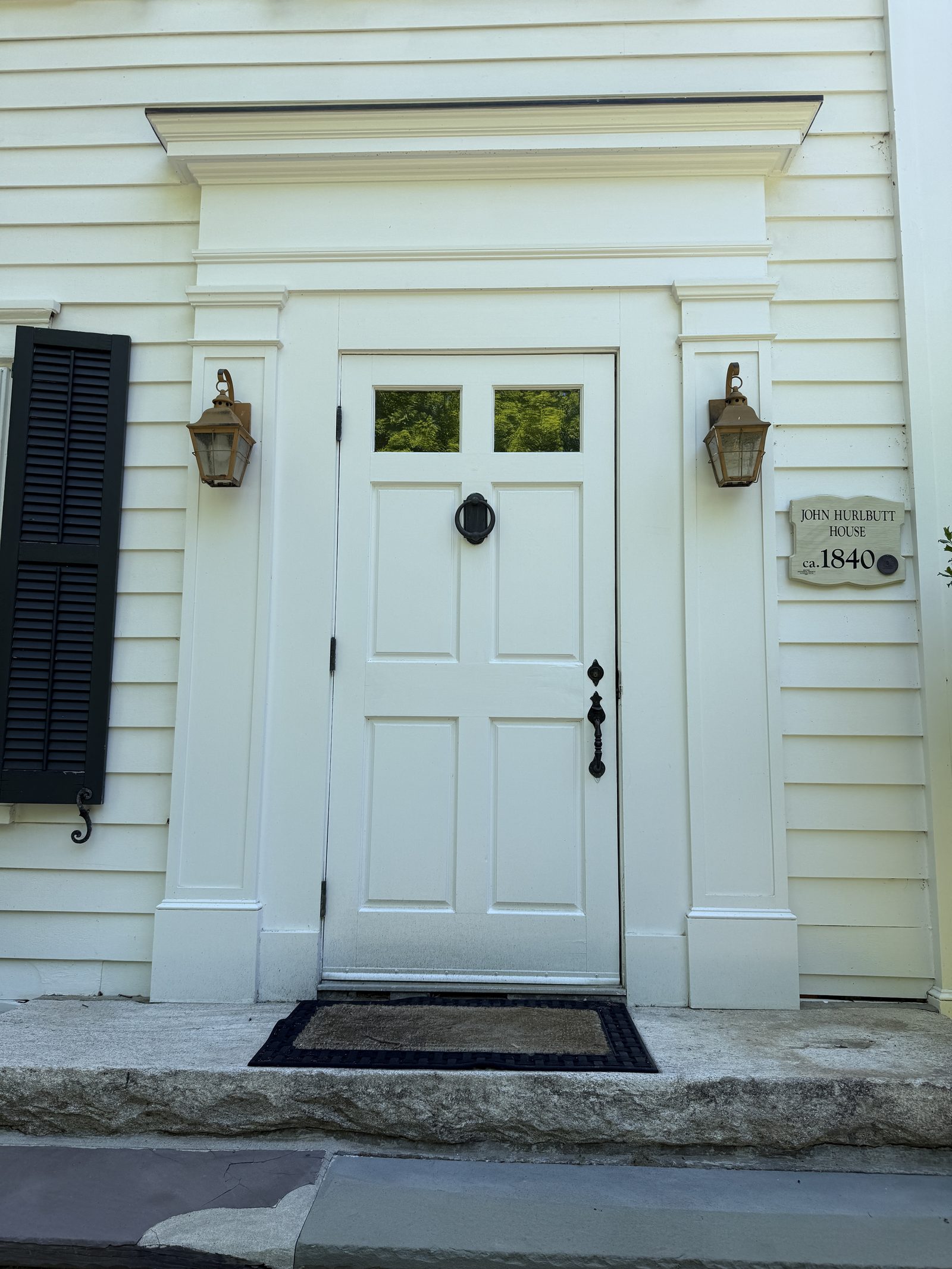
White oak is the hardwood of New England building. It framed the ships of the colonial period, built the furniture of the Federal era, and still appears in the best traditional construction today as doors, windows, timber frames, and garden elements that are built to outlast everything around them. It is not a decorative choice. It is a specification made by someone who understands what the material does and how long it lasts when used correctly.
White oak has a quality of surface that no softwood and no manufactured material approximates. The grain is open and pronounced, with a figure — particularly in quartersawn material — that is specific to this species. The medullary rays that appear in quartersawn white oak as flecks of silver-gold across the face of the board have been prized in furniture and interior work for three centuries. In exterior applications, the grain is the surface that weathers, and weathered white oak develops a grey that is different from weathered cedar — darker, more complex, with the grain still legible beneath the surface color.
A white oak door on an old New England house reads as a serious decision. It has weight, both literal and visual. It does not flex, does not rattle, does not behave like a hollow-core door dressed up with trim. It behaves like what it is, which is several inches of dense hardwood fitted precisely into a frame that was made to hold it.
White oak, Quercus alba, is native to New England and was the dominant hardwood of the colonial forest. It is distinguished from red oak by its closed grain structure — the pores in white oak are plugged with tyloses, which makes it naturally resistant to water penetration and rot. This is why white oak was used for ship planking, wine barrels, and exterior applications where red oak would fail within years.
For exterior doors and windows, white oak should be specified as vertical grain or quartersawn material wherever possible. Flat-sawn white oak moves significantly with moisture and will cup and warp in exterior exposure if it is not properly constructed and finished. Quartersawn material is dimensionally more stable and performs better over time in all exterior applications.
White oak for timber framing is a different specification than white oak for millwork. Structural timber is typically air-dried rather than kiln-dried, and it is expected to check and move as it dries in place. This is normal and does not affect structural performance. For doors and windows, kiln-dried material is required.
White oak finished with a penetrating oil finish — tung oil, danish oil, or a purpose-formulated hardwood exterior oil — weathers slowly and gracefully. The oil must be renewed every two to three years on south and west exposures, less frequently on protected or north-facing surfaces. A door that is maintained this way will not require stripping or refinishing on any normal maintenance cycle. It simply deepens and darkens over time.
White oak painted performs differently from white oak oiled. Paint on white oak requires the same attention to end grain sealing and primer that any exterior wood does, and it requires more frequent repainting than paint on softwood because the dense grain of the oak moves more deliberately and can telegraph that movement to the paint film. For exterior applications where paint is the finish, a penetrating oil primer before the paint system is important.
White oak left completely unfinished will weather to a dark grey — darker than cedar, with more brown in the tone — and will check along the grain. The checking is not structural failure. It is the wood responding to weather. On garden furniture, pergola posts, and structural elements that are meant to weather, unfinished white oak is entirely appropriate.
Specify white oak, not red oak, for any exterior application. For doors and windows, quartersawn or vertical grain, kiln-dried, from a millwork shop that works in hardwoods. For timber framing, air-dried is acceptable and traditional. For garden elements, any grade of white oak is appropriate — the material will weather regardless of figure or grain pattern.
Finish with a penetrating hardwood exterior oil for oiled finishes. For painted finishes, penetrating oil primer on all surfaces including end grain, two coats exterior paint. Renew oiled finishes every two to three years on exposed elevations.
White oak, quartersawn or vertical grain where possible, for exterior doors, windows, and millwork. Kiln-dried for millwork applications, air-dried acceptable for structural timber. Penetrating hardwood exterior oil finish renewed every two to three years, or penetrating oil primer plus exterior paint. White oak, not red oak. The closed grain is what makes it right for exterior use.
Something missing from the archive?
Suggest a material →