
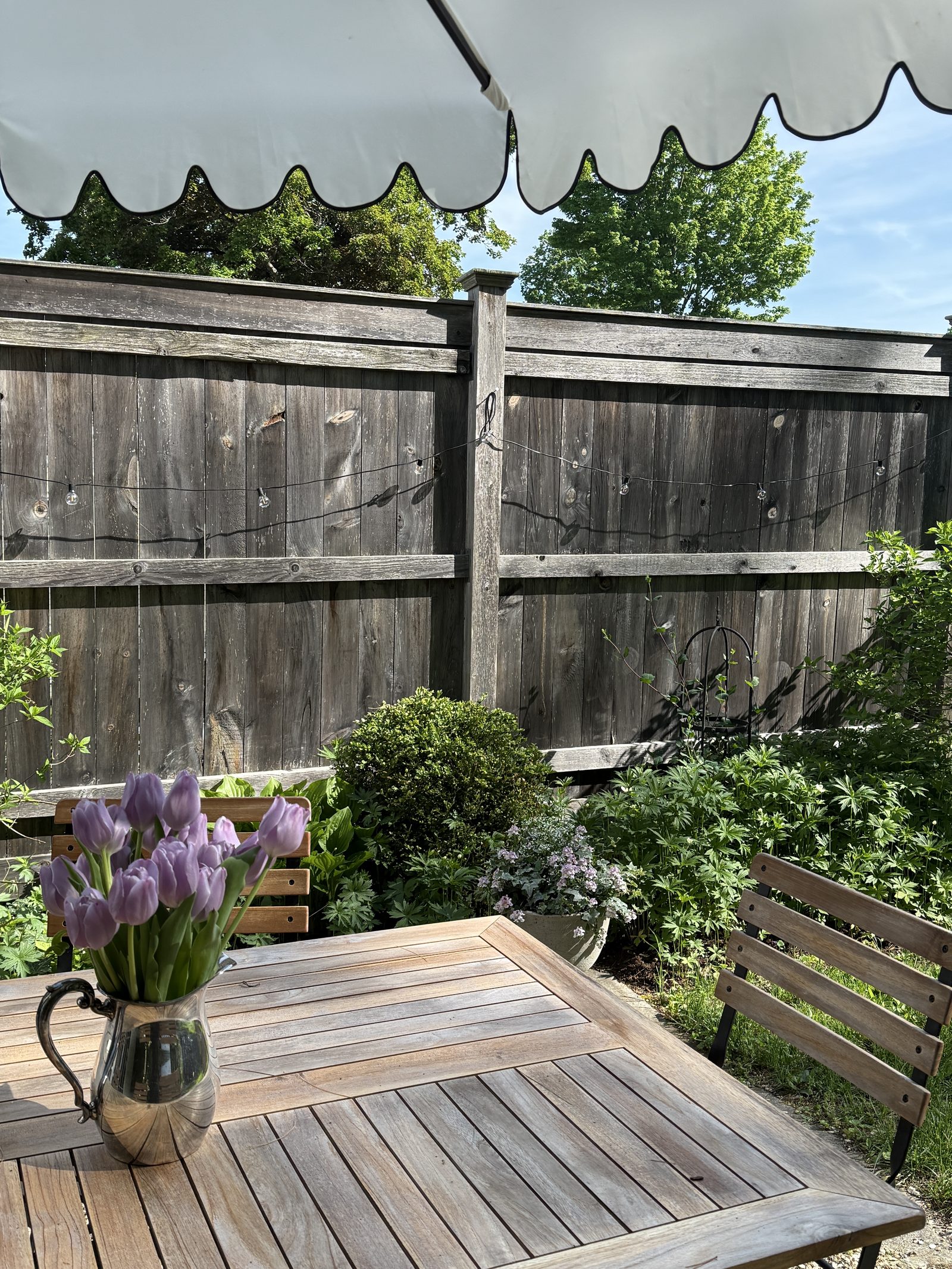
The wrong fence on the right property is one of the most common errors in New England residential landscape. The privacy fence around the front yard. The vinyl picket at the farmhouse. The ornamental metal fence at the cottage. Each of these is a material in the wrong place, signaling something about the property that the property itself contradicts. The fence type and the fence material are not separate decisions. They are one decision.
The white picket fence is the most iconographic wood fence in New England — vertical boards with shaped tops, spaced to show through, set between posts with a horizontal rail at top and bottom. The post-and-rail fence — two or three round rails through mortised posts, no boards between — defines the pastoral New England landscape. The board fence — solid vertical boards tight together or with a small gap — is the privacy fence of the kitchen garden and the back yard.
Picket fences: clear white pine or cedar pickets, 3-1/2" wide, 3/4" thick, with a dog-ear, gothic, or flat top. Rails are 2x4 clear pine or cedar. Posts are 4x4 all-heart cedar or pressure-treated, set 6 to 8 feet on center. Post-and-rail fences: round northern white cedar rails, 8 to 10 feet long, mortised through round cedar posts 8 feet on center. Board fences: rough-sawn hemlock or cedar boards, 1x6 or 1x8, set with a 1/4" gap or tight depending on application.
Wood fencing requires maintenance on a cycle. Painted picket fences need repainting every five to seven years. Unpainted cedar and hemlock board fences weather to grey without maintenance requirement but will eventually check and lose integrity at fastener points. Post-and-rail cedar fences are essentially maintenance-free — the cedar weathers and the rails are replaceable individually as they fail. All wood fencing fails at the post first if posts are incorrectly set.
Vinyl fencing approximates wood fencing visually but reads differently in person — the surface has no grain, the profiles are slightly soft at the edges, and the material expands and contracts visibly in temperature changes. On a traditional New England property, wood fencing is correct. The material is part of what the fence communicates about the property it belongs to.
From lumber yards (for picket and board fence material) and from cedar fence suppliers (for post-and-rail systems). Post-and-rail cedar fence is available as a system from farm supply stores and cedar fence specialists throughout New England. Specify species and grade for each component.
Clear white pine or cedar for painted picket fences; northern white cedar post-and-rail for pastoral and agricultural settings; rough-sawn hemlock or cedar for board fencing. All-heart cedar or black locust posts, set in compacted crushed stone. No vinyl. No composite. The material is part of what the fence says about the property.
Something missing from the archive?
Suggest a material →