
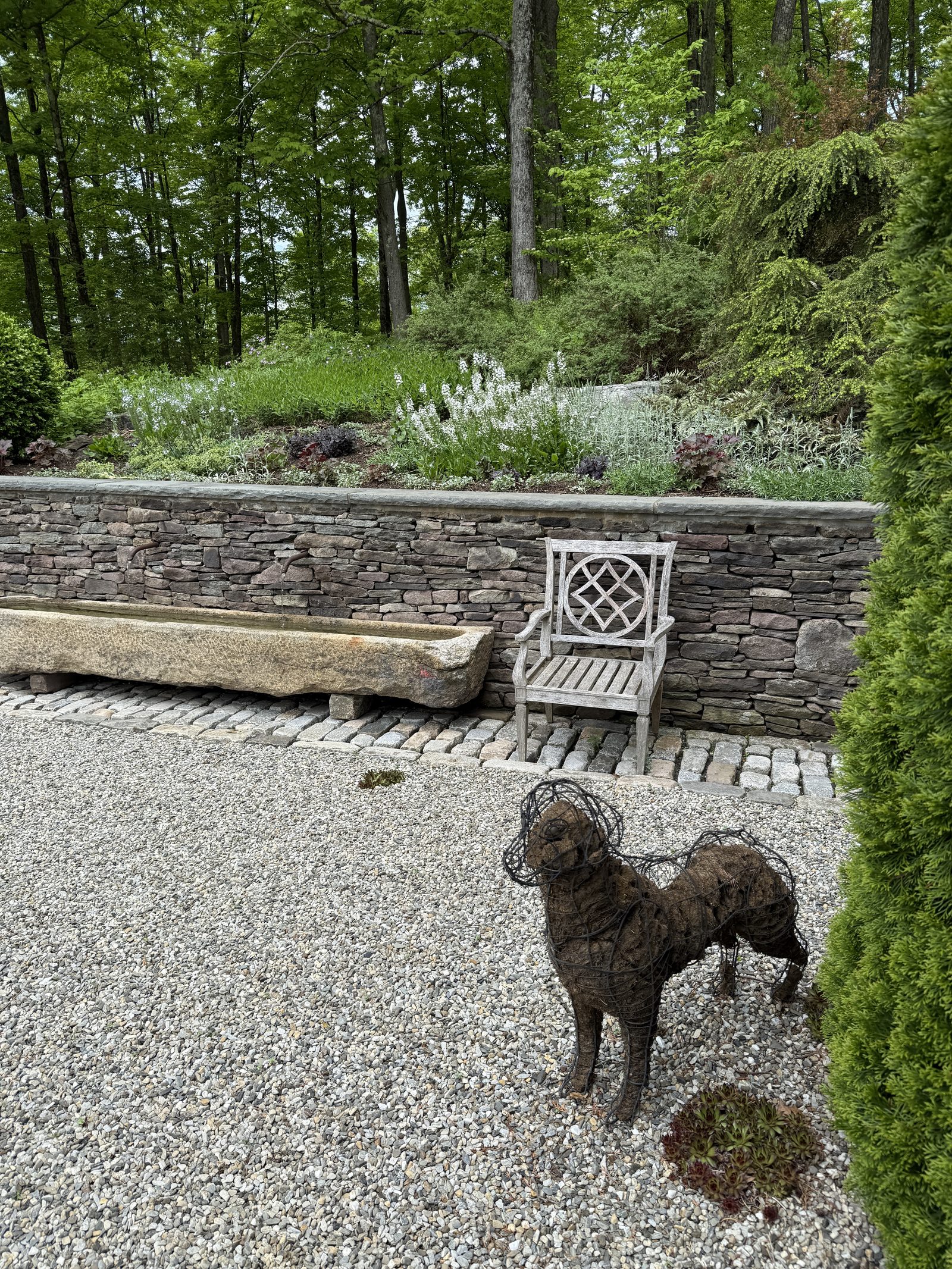
A separate entry in this archive addresses stone dust as a joint-fill and leveling material, with a caution against using it as a structural base. Used correctly as a compacted surface path material in its own right — a different application entirely — stone dust produces a firmer, smoother walking surface than loose gravel, with a more formal, less rustic character.
A well-compacted stone dust path has a smooth, almost paved feel underfoot, firmer and less prone to scattering than pea gravel, with a uniform grey color that reads as more formal and more architectural than the warm tones of native gravel. It compacts to a surface nearly as firm as a paved path while remaining permeable.
Stone dust for path surfacing is compacted in thin lifts (1 to 2 inches) over a compacted crushed stone base, then sealed with a final compaction pass and sometimes a light watering to help bind the surface. This is distinct from using stone dust as the base itself — here it is specifically the finished wearing surface over a properly draining base below.
Properly compacted stone dust paths hold their surface well under foot traffic, resisting the loose, scattering behavior of pea gravel. They require occasional re-compaction and may need a fresh top dressing every several years as the surface wears, particularly in high-traffic areas.
Stone dust paths are correct where a firmer, more formal walking surface than loose gravel is desired, while retaining the permeability and traditional material character that paving would not provide. They suit formal garden settings and high-traffic connector paths differently than the looser character of pea gravel.
From the same stone yards supplying stone dust for other applications. Specify the full system: compacted crushed stone base, then a 1 to 2 inch stone dust wearing surface, compacted in place — distinct from ordering stone dust alone without the proper base beneath it.
Compacted crushed stone base, 4 inches minimum, topped with a 1 to 2 inch compacted stone dust wearing surface, for formal garden paths and high-traffic connector paths on traditional New England properties where a firmer surface than loose gravel is desired. Re-compact and top-dress as the surface wears.
Something missing from the archive?
Suggest a material →