
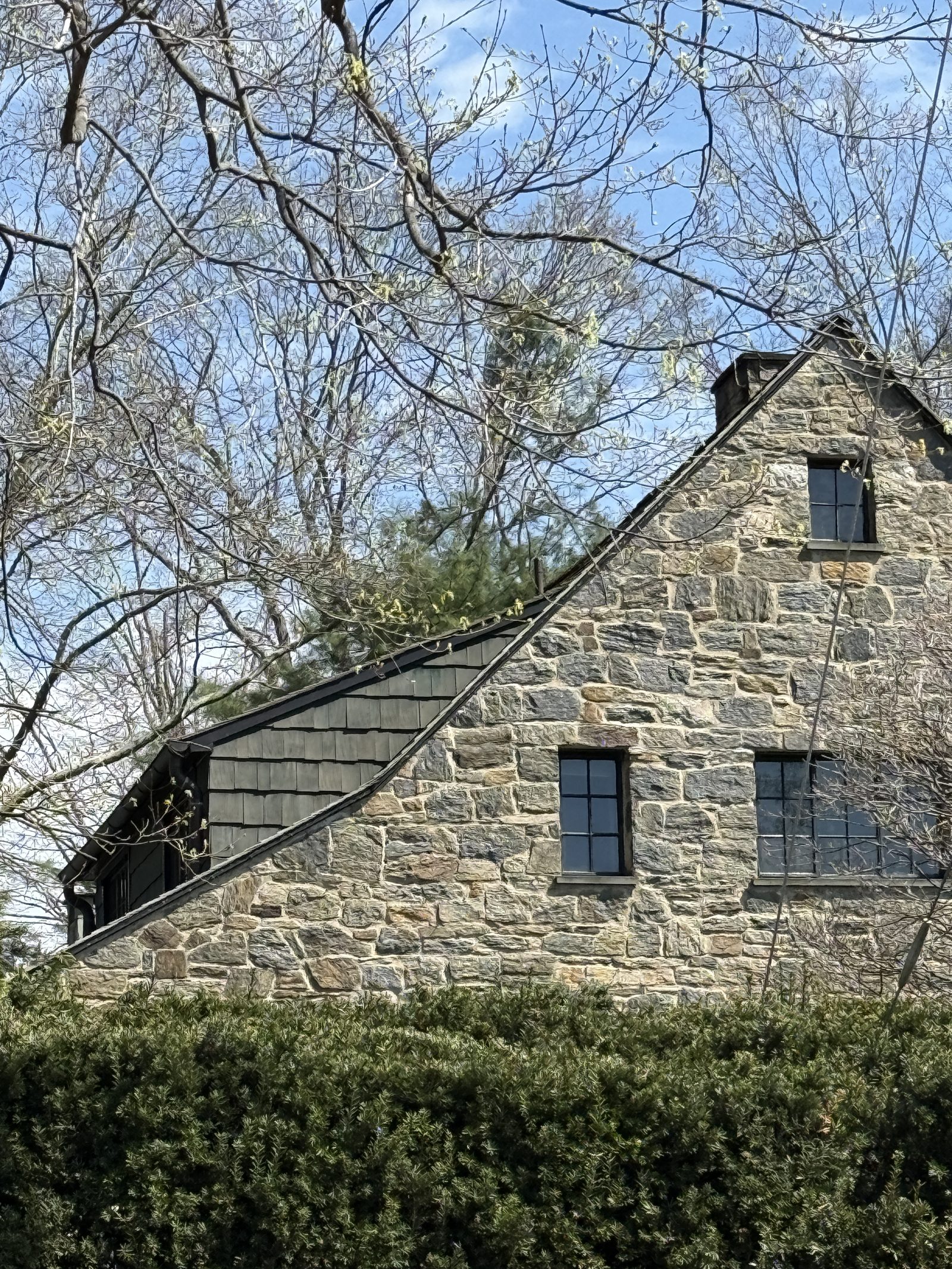
The stone wall in a New England landscape does not stand alone. It accumulates a community over time — mosses and ferns at the base, vines that climb without damaging it, wildflowers that colonize the gaps. This accumulation is not accidental. It is what a stone wall asks of its environment, and responding to it deliberately is part of designing around a wall rather than simply inheriting one.
The base of an old dry-stack wall is always soft — moss, native ferns, wild violets, and in shaded conditions, wild ginger and jack-in-the-pulpit. The wall face, if partially shaded, holds moisture and grows lichens in grey and orange-yellow. The top carries the widest range: stonecrop sedums, self-seeded asters, and in old walls, small trees that have established themselves in the cap.
The plants that belong at the base of a New England stone wall are native species adapted to the conditions the wall creates: part shade, excellent drainage at the wall face, and slightly alkaline soil from the leaching of calcium-bearing stone. Recommended species: hay-scented fern (Dennstaedtia punctilobula) for dry, open base conditions; cinnamon fern (Osmundastrum cinnamomeum) for moist shaded bases; wild columbine (Aquilegia canadensis) for wall faces and gaps; native mosses for the wall face itself in shaded conditions.
Native plantings at a stone wall establish themselves and spread without intervention. Hay-scented fern will colonize a dry stone wall base in three to five years from a single plant. What requires attention is preventing invasive species — bittersweet, multiflora rose, Japanese barberry — from establishing in the wall gaps where their roots can eventually destabilize the structure.
The stone wall planted with native species reads as part of the New England landscape. The same wall with cultivated hostas and daylilies at its base reads as a garden. The distinction matters because it determines whether the wall is in its landscape or sitting in front of it.
From native plant nurseries. Plant in fall or early spring. For wall base plantings, choose species appropriate to the specific light conditions — full sun, part shade, or full shade — and drainage. Do not amend the soil at the wall base; the native species are adapted to lean, well-drained conditions and will not perform better in enriched soil.
Native ferns, mosses, and wildflowers appropriate to the light and moisture conditions of the specific wall base, for planting at dry-stack stone walls on traditional New England properties. No cultivated varieties of native species — straight species, Connecticut or New England ecotype. Monitor annually for invasive shrubs establishing in wall gaps and remove before they are established.
Something missing from the archive?
Suggest a material →