
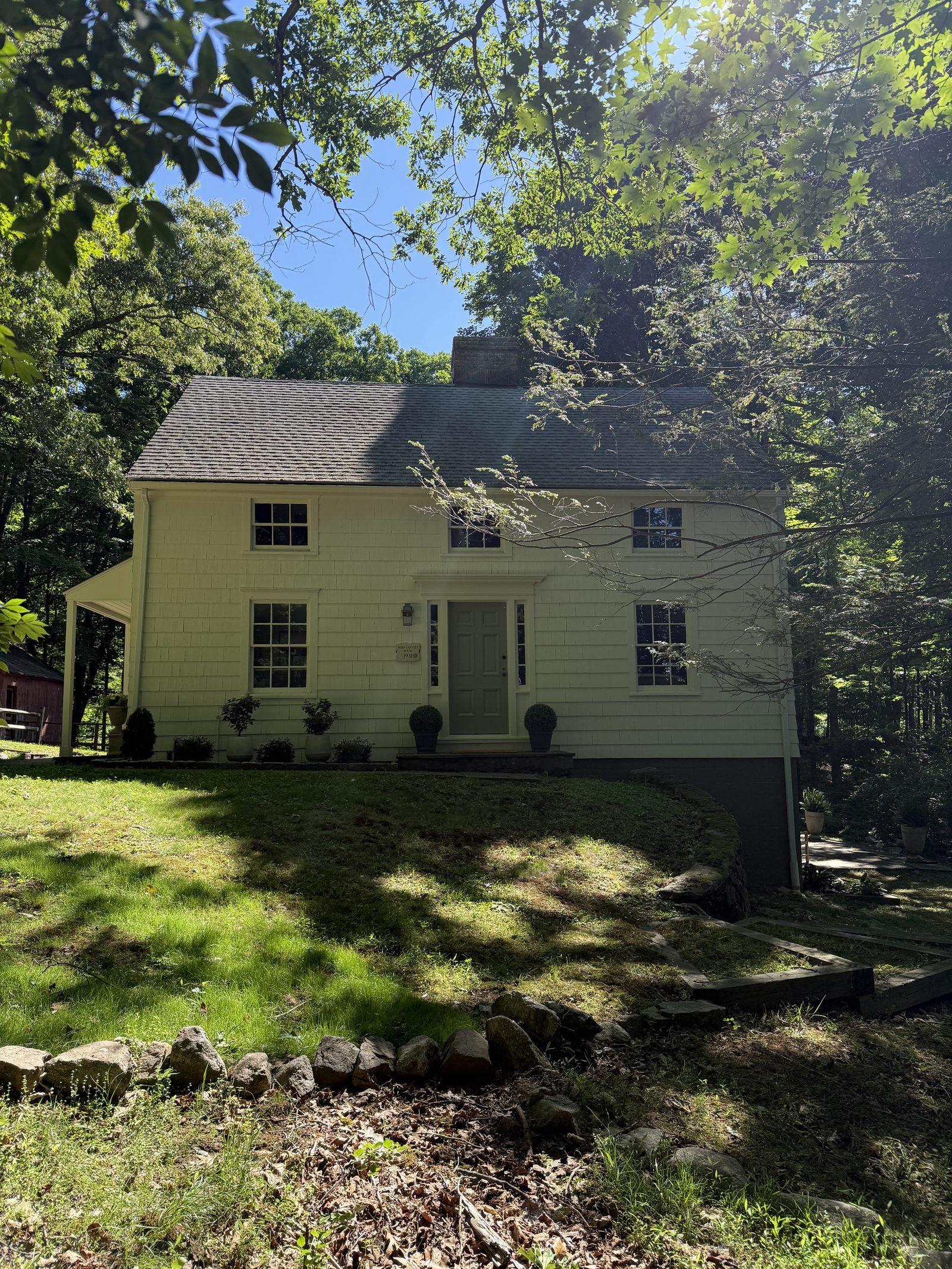
The decision between paint and stain on exterior wood is not primarily an aesthetic decision. It is a material decision. Cedar shingle siding should not be painted. It should be stained or left to weather. Clapboard should not be stained. It should be painted. The reasons are rooted in how each material is made, how it moves, and what it is designed to receive.
A semi-transparent oil-based stain on cedar shingle siding produces a surface that reads as wood — the grain and the texture are visible, the color is applied as a tone rather than a coating. The shingles remain individually visible as shingles. Neither a semi-transparent nor a solid-color stain looks like painted siding. Neither is trying to.
Exterior wood stains range from water-thin clear penetrating oils through semi-transparent (light pigment, grain fully visible) to semi-solid (moderate pigment, grain partially visible) to solid (full pigment, grain obscured). For cedar shingle siding, semi-transparent or semi-solid oil-based stain is the correct specification. The middle grades — semi-transparent and semi-solid — are the correct range.
Semi-transparent oil-based stain on cedar shingles penetrates the wood rather than forming a film. It cannot peel. When it fails, it fails by wearing away — fading and losing water repellency — rather than by lifting and peeling the way paint does. Recoating is simpler because there is no failing film to remove.
Paint on cedar shingles traps moisture in the shingle because the paint film is relatively impermeable. Cedar shingles move significantly with moisture content changes, and paint applied over them eventually cracks and peels at the joints between shingles. Stain, which penetrates rather than films, accommodates this movement.
From paint dealers. Specify: oil-based, semi-transparent or semi-solid, for cedar shingle siding. Leading products include Cabot Australian Timber Oil and similar penetrating oil-based stains. Color selection should be guided by the weathered cedar palette — grey-green, silver-grey, or driftwood tones are historically correct for coastal and vernacular New England.
Semi-transparent or semi-solid oil-based penetrating stain for cedar shingle siding on traditional New England residential buildings. Apply to shingles before installation for full coverage including hidden faces. Recoat every 3 to 7 years depending on exposure. Do not use latex paint or solid latex stain on cedar shingles. The stain wears. It does not peel.
Something missing from the archive?
Suggest a material →