
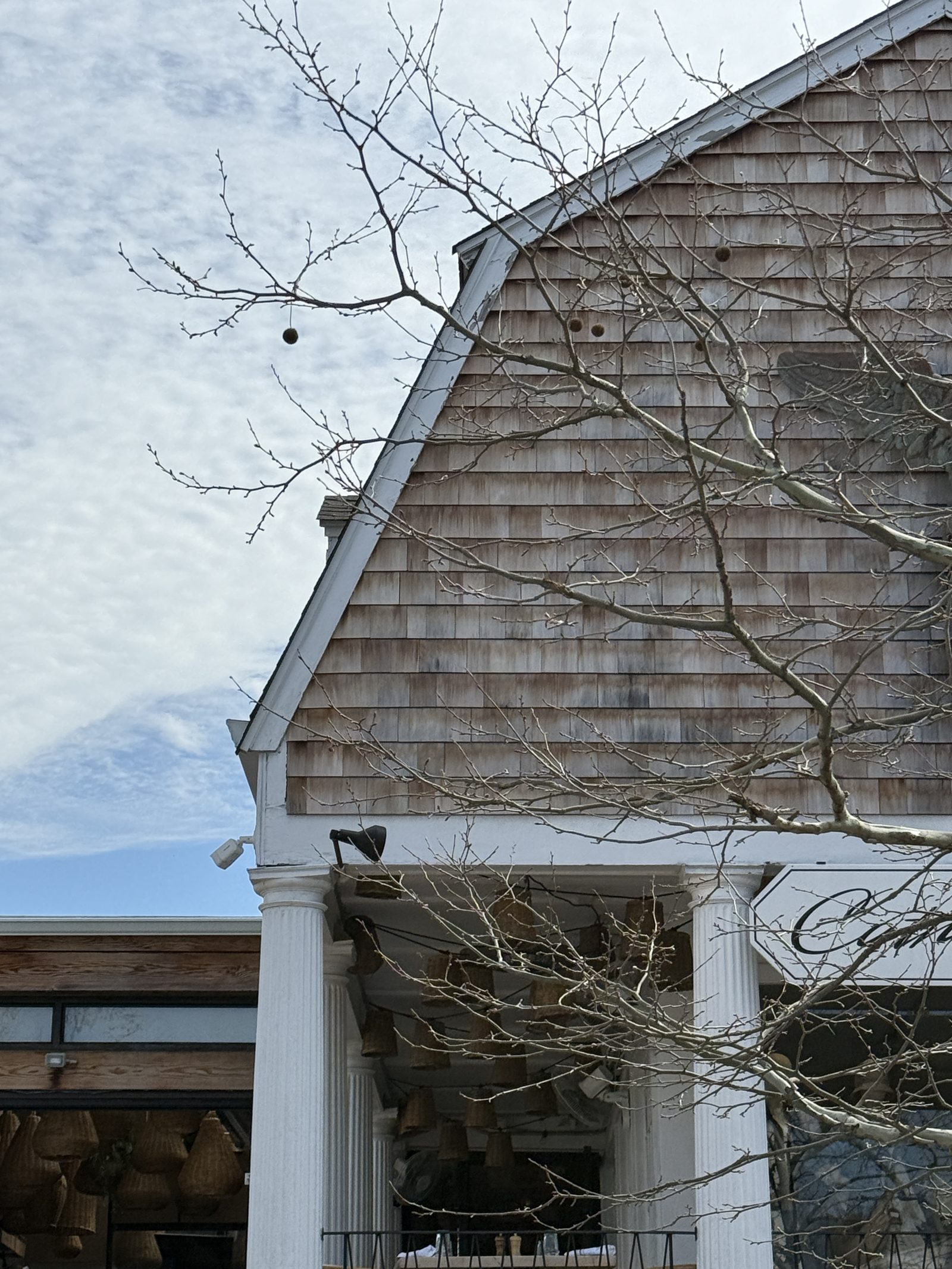
There is a moment, somewhere in the third or fourth year, when the cedar stops looking like it is weathering and starts looking like it has always been that way. The pale straw of new wood is gone. The streaky first-year mottling is gone. What remains is a grey so even and so quiet that it seems less like a finish and more like a fact, as inevitable as the stone walls at the property line or the November light that makes everything in New England look like it was painted by the same hand.
This is eastern white cedar. And this is what it does.
A cedar-shingled house in its fifth or sixth year does something that no painted surface can do. It stops being a material and becomes a climate. The grey it arrives at is not a color chosen from a deck of samples. It is the accumulated result of sun, rain, frost, and salt air working on wood over time, specific to this region, specific to this exposure, specific to this house.
Run your hand across a weathered cedar shingle and it is smooth in a way that new wood never is. The grain has opened slightly. The surface has given up its rawness. It has, in the truest sense of the word, settled.
Eastern white cedar, Thuja occidentalis, not western red cedar, not spruce, not pine. The distinction matters. Red cedar weathers differently. It darkens, goes blotchy in coastal exposure, and over time takes on a color that reads less silver than brown-black. White cedar silvers. Evenly, reliably, beautifully.
The shingle grade for exterior walls is Extra or Clear, tight-grained with minimal knots, re-butted and re-jointed for clean coursing. Maximum exposure on a 16-inch shingle is 5 inches. The exposure determines the shadow line, which determines the texture of the wall from any distance. Get the exposure wrong and the wall looks restless. Get it right and it reads as one quiet surface.
Raw cedar is the color of pale straw with a slight green undertone. In the first months it begins to mottle, sun-facing surfaces grey faster, protected areas under eaves hold their color longer. This unevenness troubles some clients. It should not. It is temporary.
By year two to three, on a well-exposed New England elevation, the silvering begins to even out. By year five it is complete, a warm grey that sits somewhere between a winter sky and a piece of driftwood left above the tide line.
Here is the nuance that matters, and it is one the Boston-based architect Patrick Ahearn has noted from decades of coastal work: the classic silver-grey most people associate with cedar shingles is largely a coastal phenomenon. Salt content in the air accelerates and evens the weathering in a way that inland New England air does not fully replicate. Inland, in a protected location, unfinished white cedar may weather darker, closer to brown-grey than silver-grey, and less uniformly.
If the property is not on the water, and the true silver is the goal, a bleaching oil applied at installation will bring the shingles to an even grey and maintain that tone as natural weathering takes over. The bleaching oil does not fight the process. It starts it. The result reads as natural because it is natural, simply accelerated.
Cedar shingles have clad New England houses since the first colonists recognized the native tree's resistance to rot and its willingness to be worked with hand tools. They are not a stylistic choice in the way that board and batten or clapboard is a stylistic choice. They are the default material of this place, what the region reaches for when it is building seriously.
The alternatives reveal themselves over time. Fiber cement can approximate the profile of a cedar shingle but it does not weather. It holds its factory finish, which means it looks the same in year fifteen as it did in year one, and that sameness is exactly what is wrong with it. Traditional New England materials earn their appearance. They are not frozen at installation.
Specify eastern white cedar, Extra grade, 16-inch shingle, re-butted and re-jointed. Confirm the origin, domestic not imported. Ask about kiln drying, which reduces the likelihood of warping in the first season.
If the project is inland and the goal is silver-grey, discuss bleaching oil at installation. Cabot and similar manufacturers produce bleaching stains formulated for cedar. Applied before installation if possible, as dipping the shingles is more effective than brushing them in place, though more labor intensive.
Avoid factory-primed or pre-painted shingles if the goal is natural weathering. Avoid clear-grade shingles for wall applications. The tighter grain of Extra grade performs better over time and the visual difference is negligible.
Eastern white cedar shingles, Extra grade, 16-inch, re-butted and re-jointed. Unfinished for coastal installations where salt air will drive even silvering. Bleaching oil applied at installation for inland projects where true silver-grey is the goal. 5-inch maximum exposure. This is the siding material of traditional New England. The grey it becomes is not weathering. It is the material arriving at what it was always going to be.
Something missing from the archive?
Suggest a material →