
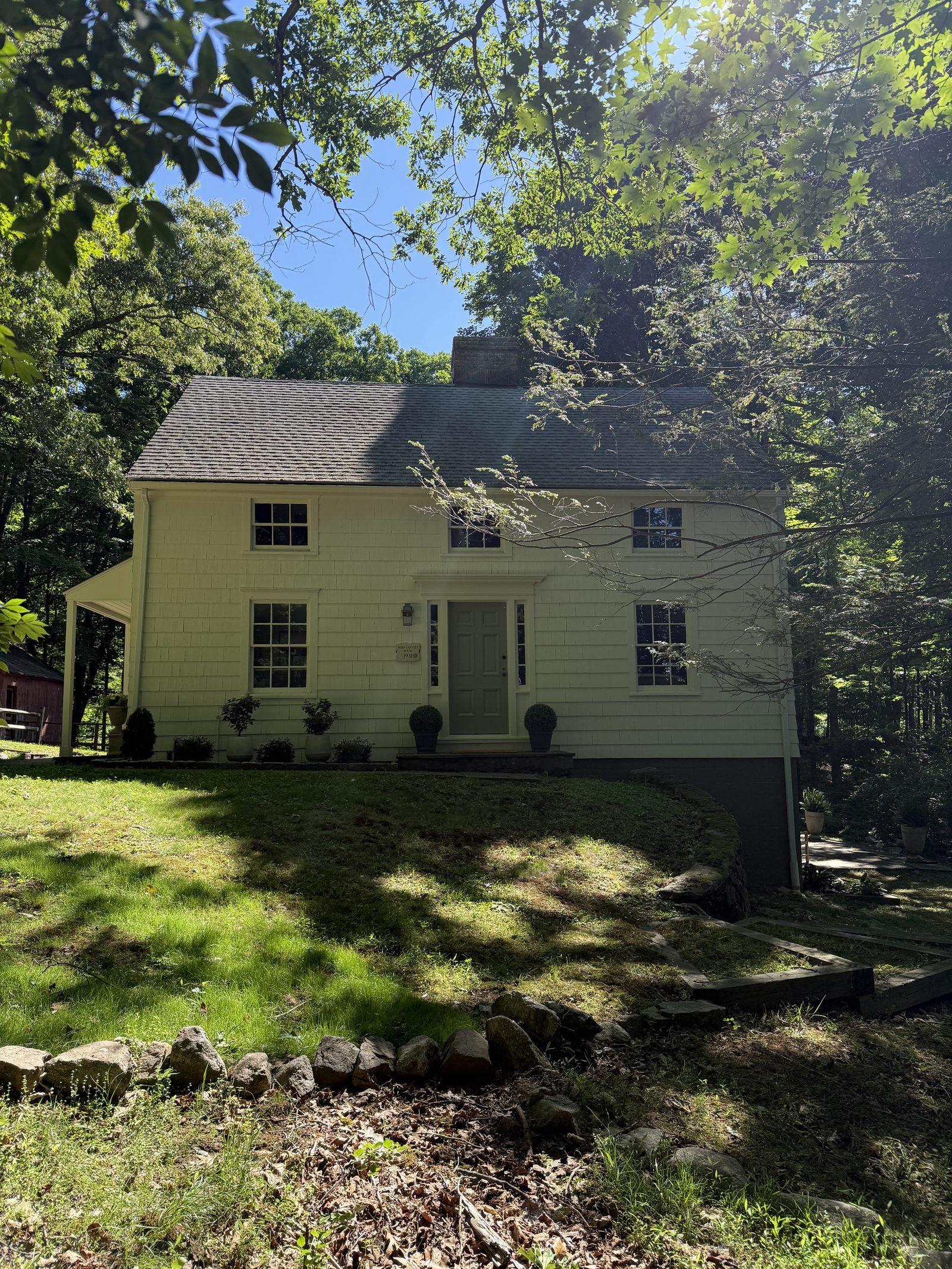
Every house in New England built before 1978 has lead paint somewhere. On most houses built before 1940, lead paint is everywhere — body, trim, interior walls, window sashes. This is not a small problem to work around. It is the material reality of the existing building stock. Understanding what lead paint is, how it behaved, and how to address it correctly is not optional for anyone working on traditional New England buildings.
Lead paint is not visually distinguishable from non-lead paint by appearance. What distinguishes aged lead paint is its failure pattern: it fails by checking — a pattern of small rectangular cracks like alligator skin — before it fails by peeling. This checking pattern, visible on the exterior woodwork of pre-1940 buildings throughout New England, is the characteristic signature of lead alkyd paint that has aged beyond its maintenance cycle.
Lead paint uses white lead (lead carbonate or lead sulfate) as the primary pigment binder in a linseed oil or alkyd vehicle. White lead was the standard paint pigment from the Colonial period through the early 20th century, valued for its hiding power, durability, and flexibility. Lead was banned from residential paint use in the United States in 1978. Paint manufactured before 1978 may contain lead; paint manufactured before 1940 almost certainly does.
Lead paint that is in good condition — intact, not peeling or chalking — is not an immediate health hazard and may be encapsulated or painted over rather than removed. Lead paint that is deteriorated — peeling, checking, chalking, or on friction surfaces such as window sashes — requires remediation. The EPA's RRP Rule requires that contractors working on pre-1978 housing be certified in lead-safe work practices.
Lead paint is not "right" — it is the material reality of the existing building stock, and understanding it is part of working responsibly on traditional New England buildings. The question is not whether to use lead paint (it is banned) but how to address the lead paint that exists.
Lead paint is not available for purchase. For testing, use a lead test swab (available at hardware stores) or hire a certified lead inspector for a full assessment. For remediation, hire an EPA RRP-certified contractor. For encapsulation, use a latex encapsulant paint designed for the purpose.
Intact lead paint on traditional New England buildings: encapsulate with a compatible paint system. Deteriorated lead paint: remediate by a certified contractor using EPA RRP lead-safe work practices before repainting. New exterior paint over existing lead paint: use a high-quality oil-based alkyd or oil-modified alkyd system that is compatible with the existing substrate.
Something missing from the archive?
Suggest a material →