
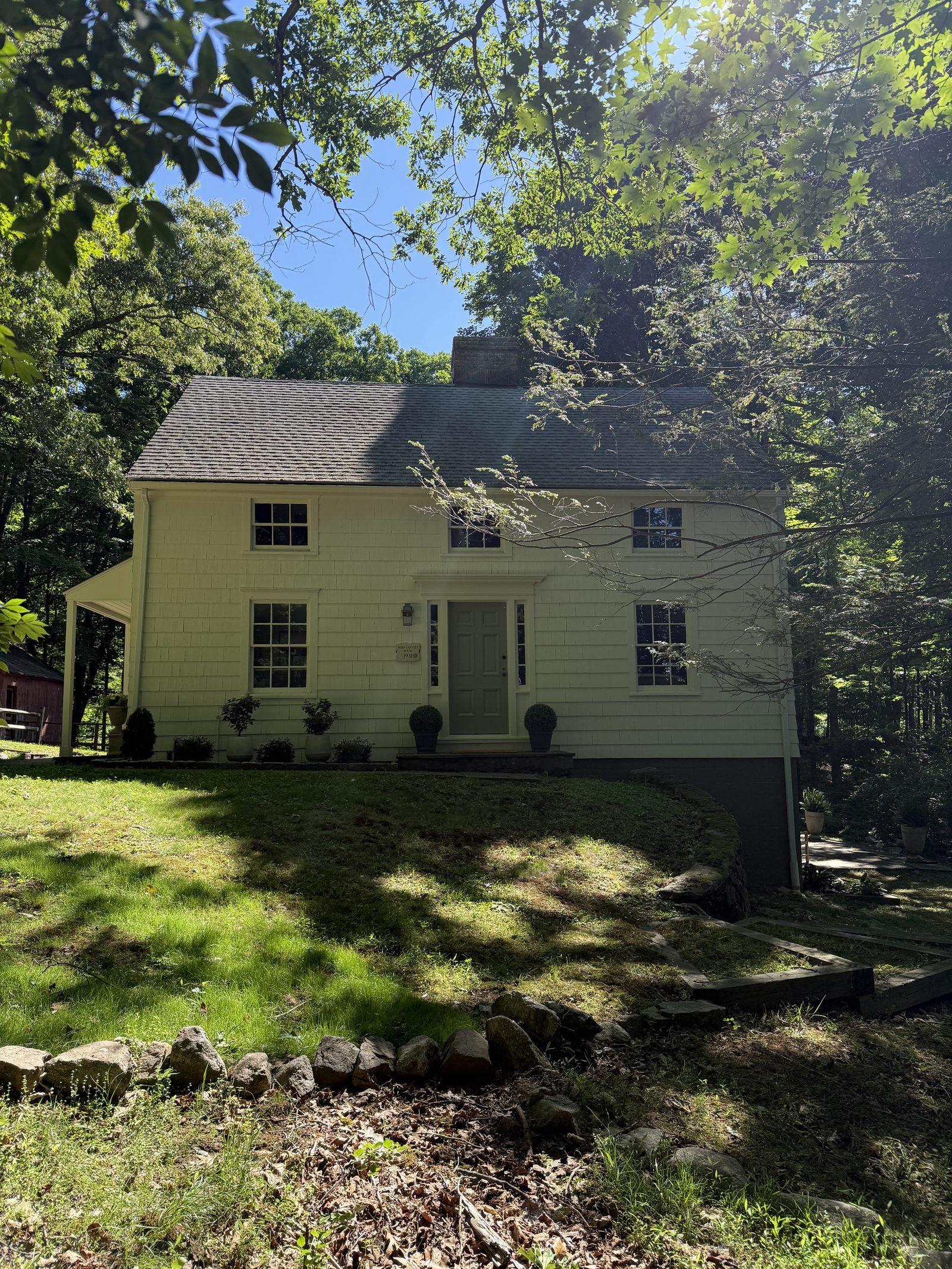
The colors of traditional New England buildings were not arbitrary. They were determined by what pigments were available, what linseed oil and lead white did to those pigments in a film, and what the regional vernacular had established over generations. The Federal house is not white because white was fashionable. It is white because lime wash and white lead were the available materials, and because the Federal aesthetic expressed itself in the most neutral possible palette.
Federal period (1780-1820): White or warm off-white body, white trim, dark shutters — dark green, black, or dark red. The white is not a bright modern white. It is the warm, slightly creamy white of lead paint over an oil vehicle. Greek Revival (1820-1850): White or very light grey body, white trim, dark green shutters. Victorian (1860-1900): Much broader palette — body colors in warm ochres, olive greens, terracotta, and grey-brown; trim in lighter tones of the same color family or in cream; accent colors at porches and decorative details in darker or contrasting tones.
Historic exterior paints were lead-based — white lead (lead carbonate) in linseed oil was the standard paint vehicle from the Colonial period through the early 20th century. The color palette was determined by the available earth pigments: yellow ochre, raw umber, burnt umber, Venetian red, lamp black, Prussian blue. Modern paint manufacturers have researched and reproduced these palettes: Benjamin Moore's Historical Color collection, Farrow and Ball's Traditional Palette, and the National Trust Historic Paint collection are among the most carefully researched modern equivalents.
Historic colors in modern paint formulations behave as modern paint does — the historical accuracy is in the color, not the material. For the most accurate color and finish character on a historic building, oil-based alkyd paints in historically researched colors are the closest approximation to the original.
A Greek Revival house painted in contemporary colors — a saturated blue body, a bright white trim — reads as a contemporary choice applied to a historic form. The period color palette is part of what makes a period building read correctly. The colors are not decoration. They are part of the building's historical identity.
Benjamin Moore's Historical Color collection and Farrow and Ball's palette are the most accessible high-quality sources for historically researched exterior colors. For the most rigorous approach, paint analysis of existing historic layers by a preservation specialist can identify original colors from the specific building.
For Federal and Greek Revival buildings: warm white or off-white body (Benjamin Moore White Dove OC-17 or equivalent), white trim, dark green or black shutters. For Greek Revival specifically: true white body, white trim. For Victorian buildings: period-appropriate earth tones from a researched historical palette. Do not apply contemporary color choices to period buildings without researching the appropriate historical palette.
Something missing from the archive?
Suggest a material →