
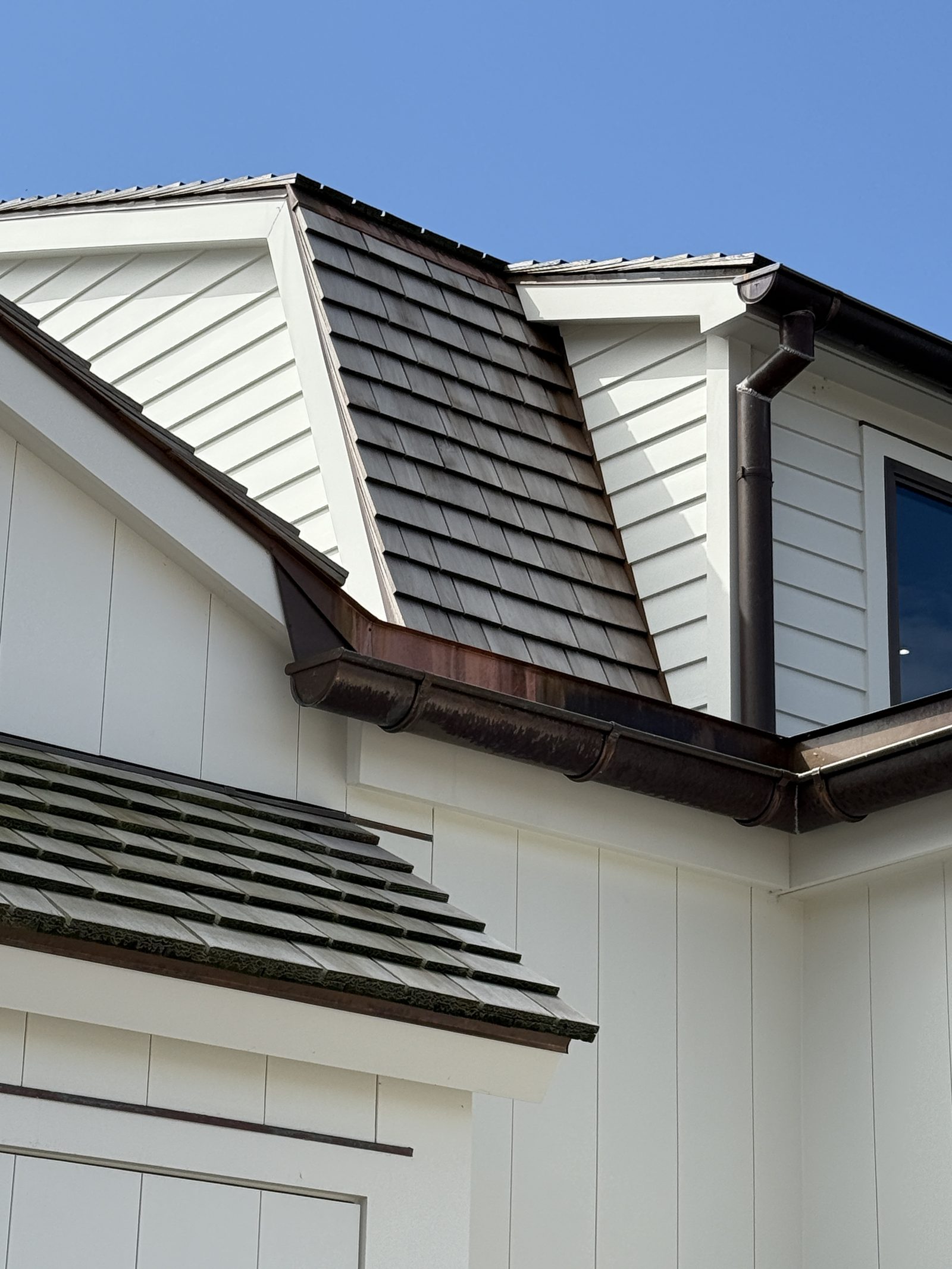
A dormer is a small fraction of a roof's total area, but it sits at eye level from the street in a way the main roof slope does not, and it is often the single most visually prominent roofing detail on the entire building. Specifying it in a material that reads as cheap or generic undermines a building far out of proportion to the dormer's actual size.
A copper-clad dormer roof and cheeks (the angled side walls of the dormer) read as a single coherent material event — the same bright-to-patinated copper covering both the small roof plane and the vertical or angled sides, set against the cedar shingle or slate of the main roof around it. This material continuity is what makes a dormer look integral rather than applied.
Sixteen-ounce copper, standing seam or flat-locked depending on the dormer roof's pitch and size, covering both the dormer roof and the cheeks (where the dormer's design calls for them to be clad rather than shingled to match the main roof). Flashing at the junction between the dormer and the main roof is critical and should be integrated as part of the same copper work, not a separate later addition.
A correctly clad and flashed copper dormer performs with the same century-plus service life as any other correctly installed copper roofing element. The junction flashing between dormer and main roof is the most common failure point if not detailed and installed by someone with specific dormer experience.
Copper at a dormer is correct on traditional New England buildings where the dormer is a small, prominent architectural feature and the cost premium of copper over a small area is proportionally minor compared to its visual impact. A dormer clad in painted aluminum or asphalt reads as a missed detail on an otherwise well-considered building.
Through the same sheet metal contractor handling the building's other copper work — gutters, flashing, primary roofing — so material and detailing are consistent across the building. Specify dormer cladding as part of the overall copper scope, not as an isolated afterthought.
Sixteen-ounce copper cladding for dormer roofs and cheeks, with integrated flashing at the main roof junction, on traditional New England buildings where the dormer is a prominent architectural feature. Specify as part of the overall copper scope of work for material and installation consistency. A small, well-detailed copper dormer carries disproportionate visual weight.
Something missing from the archive?
Suggest a material →