
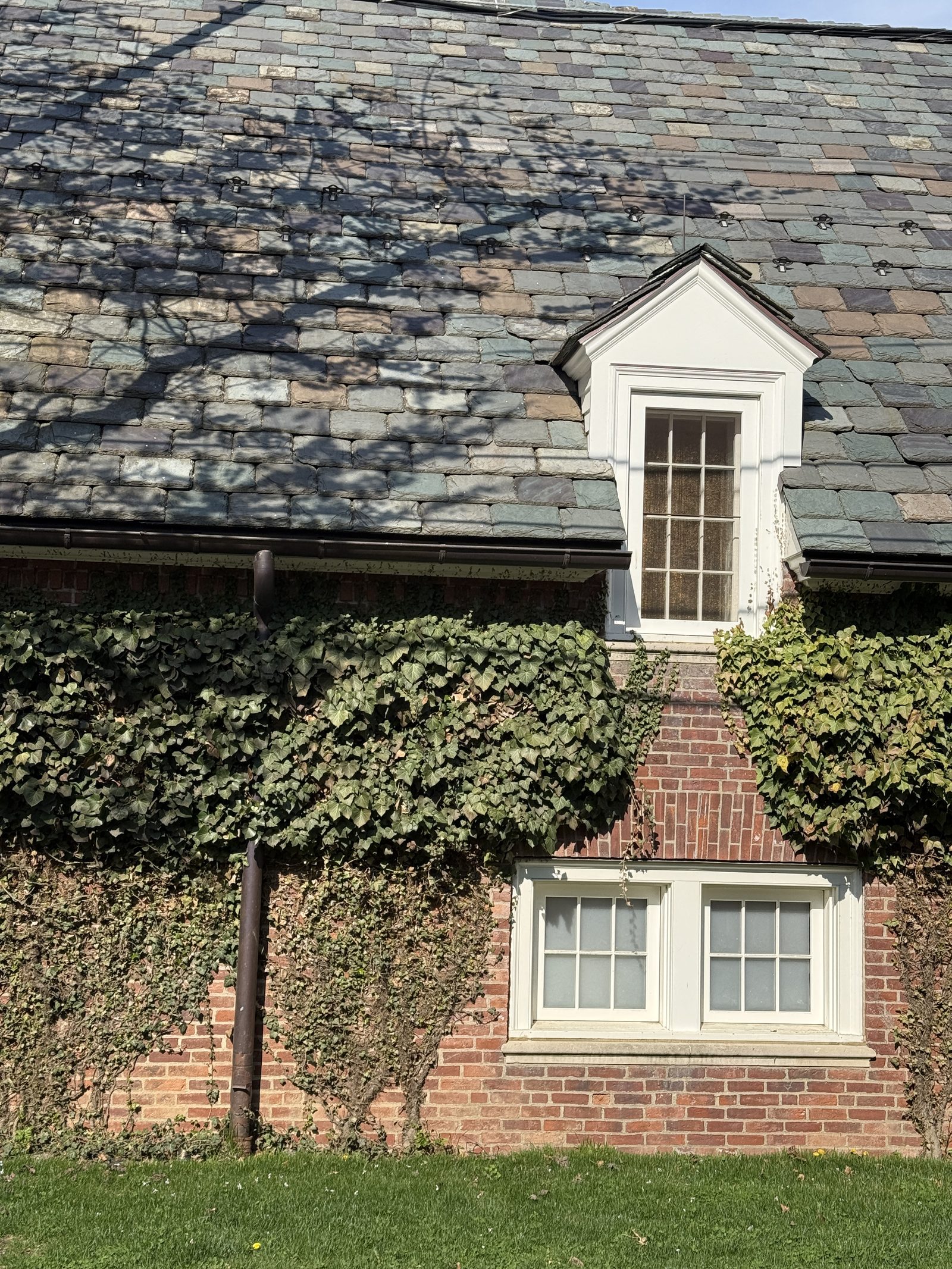
Every roofing material in this archive has a minimum pitch at which it performs correctly, and below that pitch, water that should run off instead has time to work its way under the material through capillary action and wind-driven rain. This is one of the most consequential and most frequently violated specifications in residential roofing — a beautiful material installed on too shallow a slope fails, regardless of how well everything else was done.
The relationship between pitch and material is invisible until it fails — a slate or cedar roof on too shallow a slope looks identical to a correctly pitched one until the first significant wind-driven rain event, at which point water intrusion begins at the precise locations the math predicted.
Minimum pitches for traditional materials in a New England climate: slate, 4:12 minimum (8:12 or steeper strongly preferred for longevity); cedar shingle, 4:12 minimum (3:12 with special detailing in limited cases); cedar shake, 4:12 minimum; standing seam copper or metal, as low as 1:12 to 2:12 depending on seam type and detailing, which is precisely why metal is the correct choice for the low-slope sections discussed elsewhere in this archive. Below these minimums, water has more time and more capillary opportunity to migrate under the material before gravity carries it off.
A slate or shingle roof installed below its minimum pitch will leak, typically not immediately but within a few years as wind-driven rain and ice find their way under the material at a rate the installation cannot keep pace with. This is a design and specification failure, not a material defect — the slate or shingle is performing exactly as a too-shallow installation would be expected to.
Matching material to pitch correctly is not a stylistic choice — it is the load-bearing premise of the entire roofing system. A building with mixed roof pitches — a steep main roof with a lower-pitched porch or ell roof — should transition materials at the appropriate pitch, typically from slate or cedar on the steep sections to standing seam metal on the lower-pitched sections, exactly as several entries in this archive's roofing category already describe individually.
Confirm actual roof pitch with a roofing contractor or by direct measurement before specifying any roofing material — do not assume pitch from appearance alone. For any roof section below 4:12, default to a metal roofing system rather than attempting to force slate or shingle below its functional minimum.
Slate and cedar shingle or shake: minimum 4:12 pitch, with steeper pitches preferred for longevity. Standing seam copper or metal: appropriate down to 1:12 to 2:12 depending on seam detailing. Match material to measured pitch before specification — transition to metal roofing at any section below 4:12 rather than forcing slate or shingle below their functional minimum.
Something missing from the archive?
Suggest a material →