
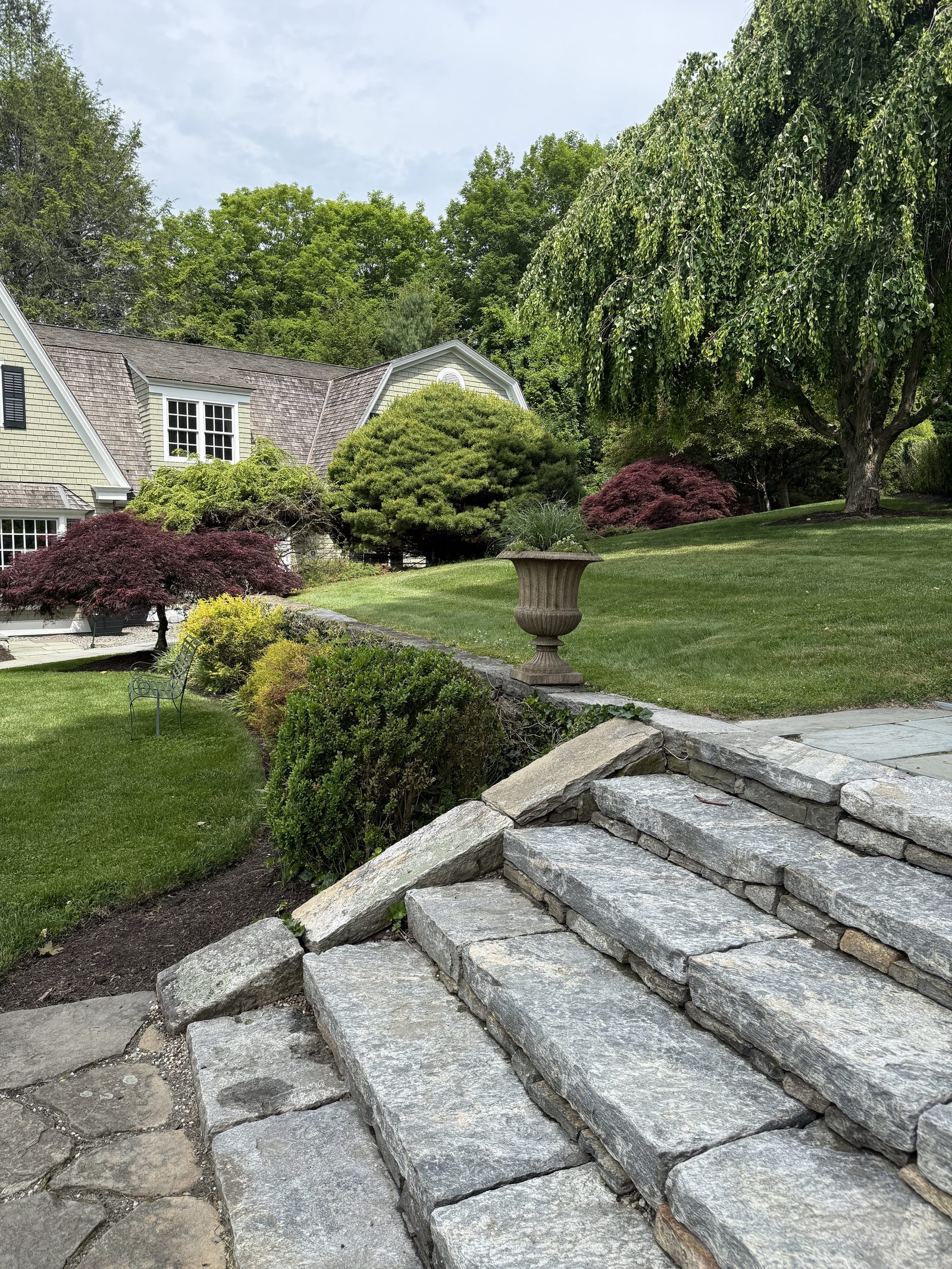
Ashlar is dressed stone — cut to rectangular faces and set in courses, as opposed to rubble, which is set as it comes from the ground. The distinction is one of formality and precision. Ashlar masonry is the facing of banks, churches, and the grander Federal and Greek Revival houses of New England. It announces that someone paid for stone to be cut, and that the building was worth cutting it for.
Coursed ashlar reads as horizontal bands of consistent height, the joints aligned in regular patterns. Random ashlar uses rectangular pieces of varying height set without consistent coursing. The face of each stone is sawn smooth or rock-faced — the latter producing a rough central surface with a sawn margin at each edge, a treatment common on 19th-century institutional granite work in New England.
Ashlar masonry in New England is primarily granite — the local stone — in coursed or random patterns. Brownstone ashlar was the facing of choice for urban rowhouses and commercial buildings in the Connecticut River valley. Limestone ashlar appears on Federal and Greek Revival buildings where carved detail was required. The standard coursed granite ashlar course height runs from 4 to 8 inches, with larger stones used at the base and smaller at higher courses.
Ashlar masonry is more water-resistant than rubble because the cut faces shed water more effectively than irregular surfaces. The mortar joints are the maintenance item. On granite ashlar, the stone itself essentially never fails. On brownstone ashlar, face spalling at incorrectly set stones is the primary concern. Repointing follows the same rule as all historic masonry: mortar softer than stone.
Ashlar masonry is the correct facing for formal traditional buildings — the Federal courthouse, the Greek Revival bank, the Italianate villa. It signals a level of craft and intention that rubble does not. On the residential scale, granite ashlar foundations and brownstone or limestone detail work are what separate the carefully considered traditional house from the merely well-built one.
From stone fabricators and masonry contractors with ashlar experience. New granite ashlar is available from New England quarries. Brownstone ashlar for restoration is available as salvage or from the Portland Brownstone Quarry for matching repairs. Specify stone type, course height, face finish, and joint profile.
Coursed granite ashlar, rock-faced or sawn finish, for formal masonry on traditional New England residential and institutional buildings. Lime mortar joints, Type N or natural hydraulic lime depending on stone hardness. Repoint with mortar softer than stone. Brownstone ashlar: Portland Brownstone only, grain parallel to face, lime mortar.
Something missing from the archive?
Suggest a material →