
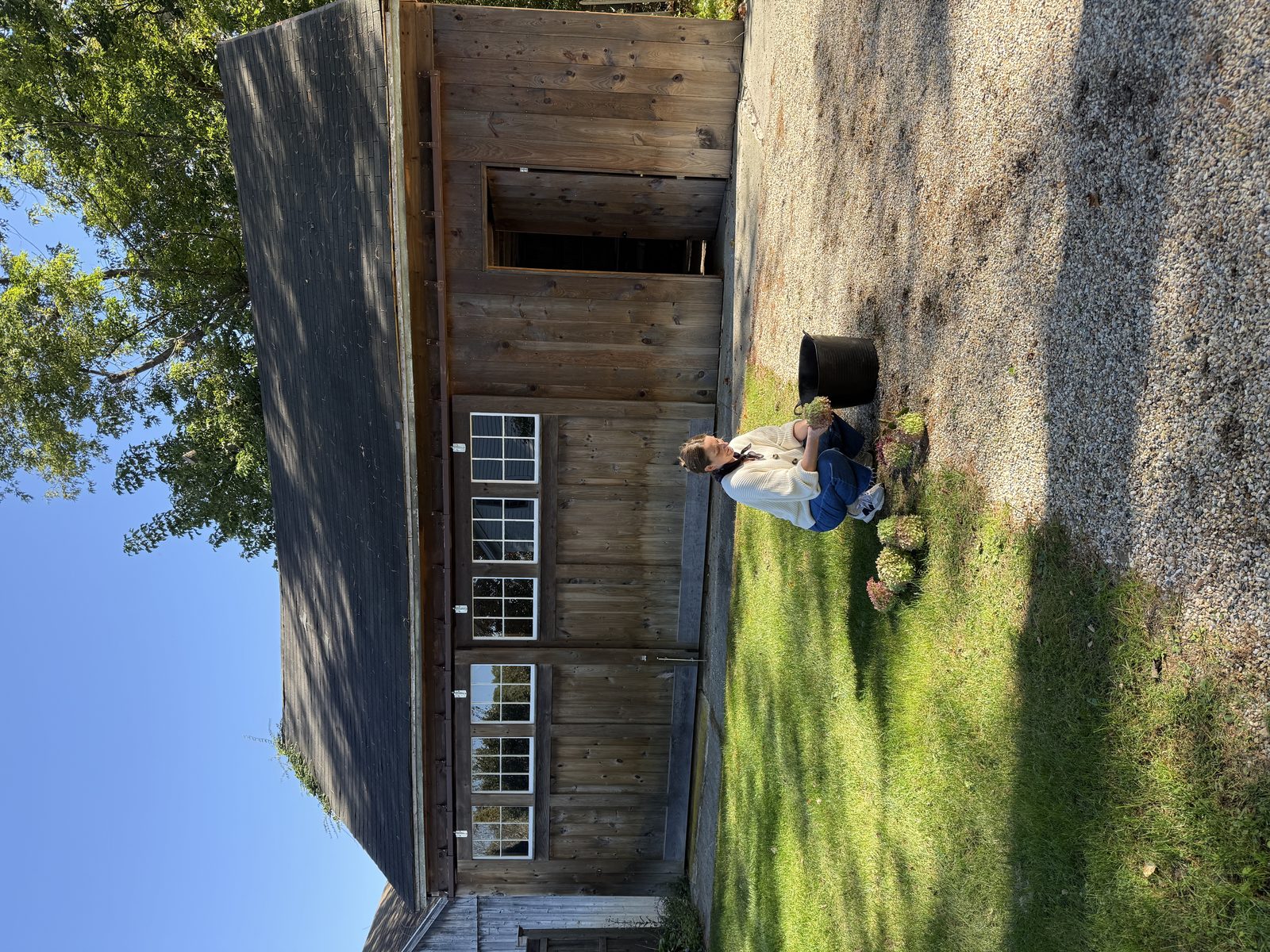
Bluestone gravel is not the same material as bluestone paving, and it does not do the same things. Where bluestone paving is dimensional stone cut to specific sizes for terraces and walks, bluestone gravel is the crushed byproduct of bluestone quarrying — irregular fragments ranging from dust to half-inch pieces, compacted into a firm surface that is specific to this stone and no other. It has a color and a character that neither pea gravel nor crushed limestone achieves, and in the right application it is one of the most quietly correct surfaces in the traditional New England landscape.
Bluestone gravel compacts to a firm, slightly dusty surface in a blue-grey range that is cooler and more specific than pea gravel's warm buff tones. Where pea gravel moves slightly underfoot and has a soft sound, bluestone gravel packs into a surface that is closer to a bound path — firm enough for garden furniture, stable enough for vehicular use, fine enough to read as refined rather than utilitarian. After rain it goes almost blue-black and dries to a pale grey that changes with every angle of light.
It is the surface of the traditional stable yard and the kitchen garden path. Not the front driveway, which is pea gravel's territory, but the working parts of the property — the passages between buildings, the paths through the vegetable garden, the area behind the carriage house where things are done rather than admired.
Bluestone gravel is crushed bluestone screenings, typically specified as quarter-inch minus or three-eighths-inch minus. The quarter-inch minus grade compacts most firmly and produces the finest, most refined surface. The three-eighths-inch minus grade has slightly more texture and drains somewhat better. Both are appropriate for different applications depending on the required firmness and drainage.
The material is available from quarry suppliers throughout the Northeast, typically the same suppliers who provide dimensional bluestone paving. Its color varies slightly depending on the quarry source — Pennsylvania bluestone screenings tend toward a warmer grey, Vermont and New York material toward a cooler blue-grey. For most Connecticut applications, either is appropriate and the local source is usually the correct choice.
Bluestone gravel compacts well when properly installed over a prepared base and requires occasional topping up as material is displaced by traffic and weather over time. It does not drain as freely as pea gravel — the fines in the mix fill the voids and create a semi-impervious surface — which makes it less appropriate in areas where drainage is critical. In garden path applications where drainage is managed elsewhere, this is not a problem.
Weeds establish in bluestone gravel more readily than in pea gravel because the compact, fine surface provides better seed germination conditions. A geotextile fabric under the material reduces but does not eliminate this. In kitchen garden paths and other utilitarian applications, occasional weeding is part of the maintenance. In more formal applications where weed-free surfaces are required, edged and bound gravel or a different surface material may be more appropriate.
Specify bluestone screenings, quarter-inch minus, over a compacted crusher run base of four inches minimum. Install at two to three inches depth, compacted in place. Edge with steel, granite cobble, or Belgian block to contain the material. Top up annually or as needed where traffic displaces the surface layer.
For kitchen garden paths and informal working areas, bluestone gravel is appropriate without edging where it is bounded by planted beds on both sides. For formal paths and stable yards, edge it clearly and maintain the edge. The material is forgiving of informal installation but rewards precise detailing when the context calls for it.
Bluestone screenings, quarter-inch minus, installed over four-inch compacted crusher run base at two to three inches depth. Edged with steel, granite cobble, or Belgian block in formal applications. Appropriate for garden paths, stable yards, and working surfaces where a firm, refined gravel surface is required. Not a substitute for pea gravel on front driveways. A different material for different applications.
Something missing from the archive?
Suggest a material →