
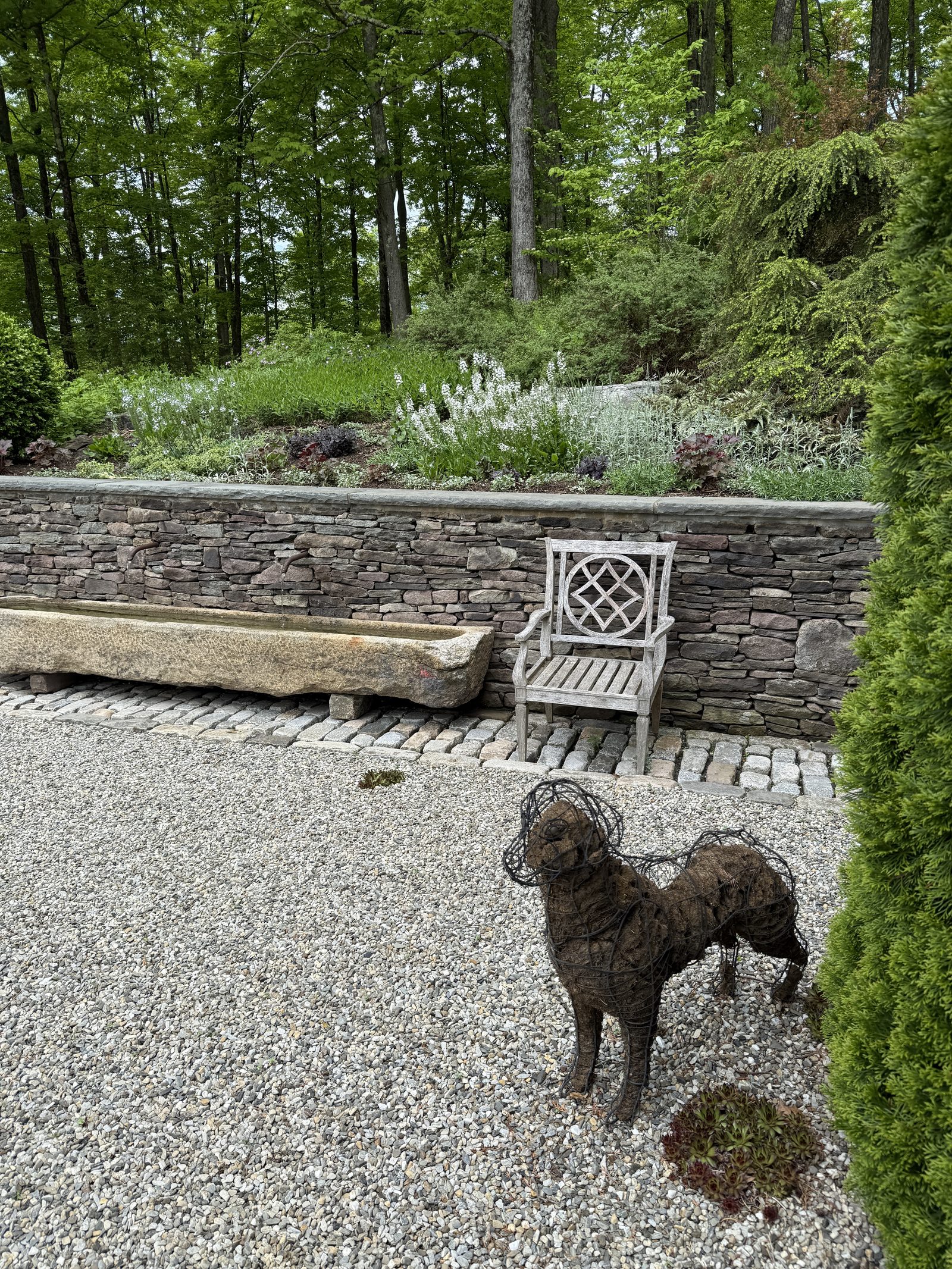
Crushed stone is not a finish material. It is the material that makes finish materials possible. Every bluestone terrace, every gravel drive, every brick walk that has held its grade for forty years is sitting on crushed stone, compacted in lifts. Getting it right is invisible work. Getting it wrong is a heaved patio and a failed drain.
Angular. Grey to blue-grey. The edges are sharp and fresh from the crusher — nothing like the rounded softness of river-washed gravel. It locks together when compacted. It does not shift. Under foot it feels solid, not loose. You do not walk on it. You walk on what sits above it.
Crushed stone in New England is almost always crushed trap rock or crushed granite, depending on the region. Trap rock — the dark basaltic stone quarried extensively in Connecticut and New Jersey — crushes to a blue-grey angular aggregate with excellent load-bearing characteristics. Crushed granite is lighter in color, warmer in tone, and more common north of Hartford. The standard grades for base work are 3/4" processed (also called 3/4" clean) and 3/4" crusher run, which includes fines and compacts more densely. For drainage applications, specify 1/2" or 3/4" clean, no fines.
Properly compacted crushed stone does not move. It sheds water through its voids while maintaining grade. Crusher run, with its fines included, binds tighter under compaction and is preferred for sub-base work beneath pavers and stone. Clean crushed stone — fines washed out — is the correct choice for drainage swales, French drains, and anywhere water management is the primary function. Neither material is appropriate as a surface finish on its own.
New England frost requires a base that moves with the ground and recovers. Crushed stone, compacted in 4" lifts to 95% proctor density, accommodates frost heave better than concrete sub-bases, which crack. The angular geometry of crushed trap rock or granite interlocks under load in a way that rounded river gravel cannot. For anything that needs to hold grade over a New England winter, crushed stone base is the correct answer.
Order by the ton from a local stone yard or quarry. For a standard 4" base over 100 square feet, figure approximately 1.25 tons of 3/4" crusher run. Specify "3/4 crusher run trap rock" or "3/4 clean crushed granite" — the distinction matters and the supplier will understand it. Ask whether the material is washed or unwashed. For drainage applications, washed and clean. For base compaction, crusher run with fines.
Three-quarter inch crusher run trap rock or crushed granite, compacted in 4-inch lifts to 95% proctor density, for all base course work beneath stone, brick, and gravel surfaces. Minimum 6 inches total depth in New England frost conditions. For drainage applications, specify 3/4-inch clean washed stone, no fines. This is not finish material. It is structure.
Something missing from the archive?
Suggest a material →