
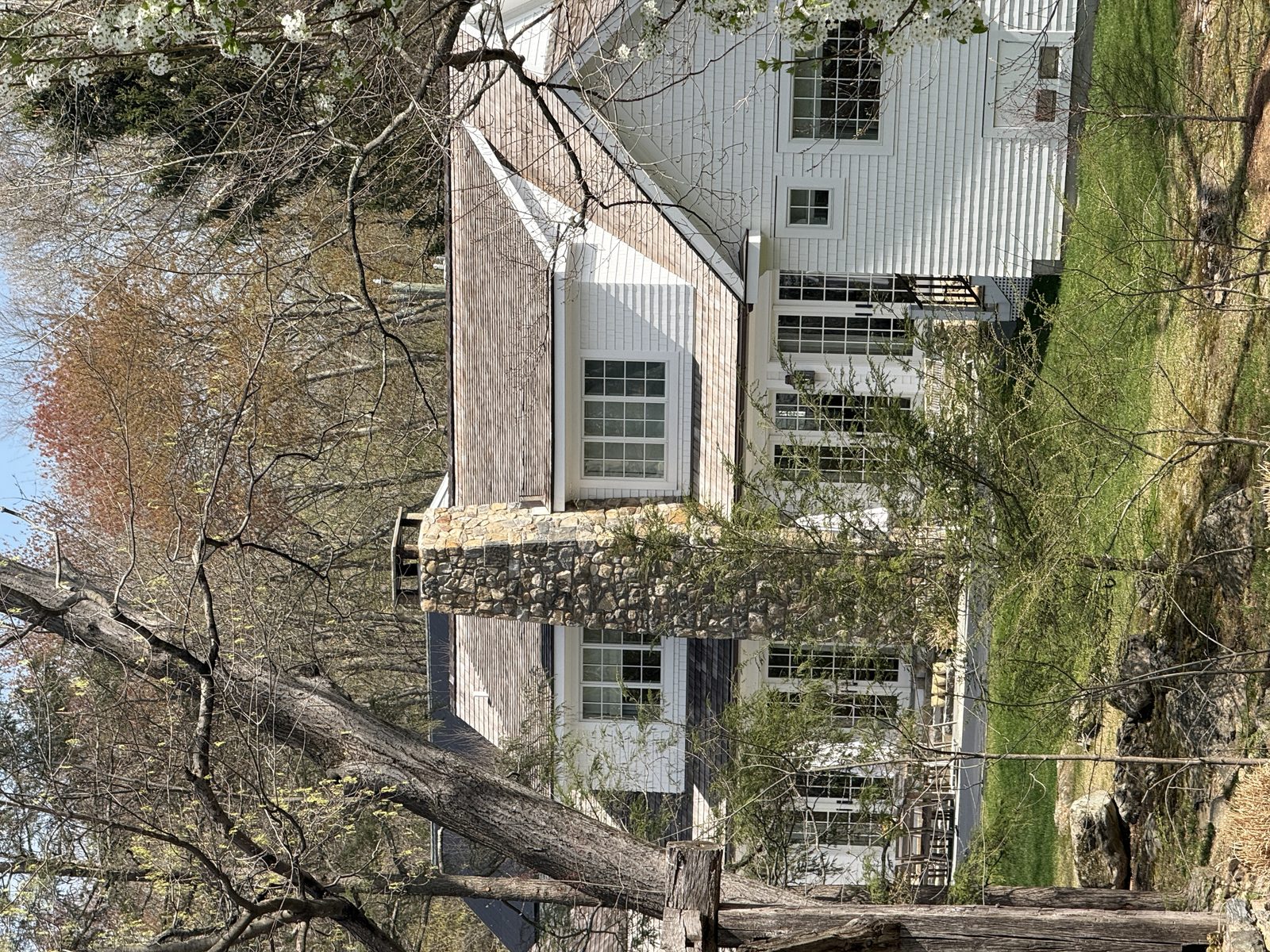
Brick in New England is primarily a chimney material and a foundation material. The great Federal period houses of Hartford, New Haven, and Portsmouth are brick. The chimneys rising from cedar-shingled and clapboard houses throughout Connecticut and Massachusetts are brick. It is not the dominant exterior material of the region the way it is in Philadelphia or Boston's Back Bay, but where it appears it carries enormous authority, and where it is done wrong it is immediately and permanently wrong.
Old brick is a warm material. The color of antique New England brick runs from pale salmon through deep red-brown, with a variation within any given wall that comes from the inconsistencies of nineteenth-century kilns. This variation is not a flaw. It is what makes old brick alive in a way that modern machine-made brick is not.
The mortar joints on historic brick are narrow, typically 3/8 inch or less, and the mortar color is warm — grey-beige, not white, not dark grey. The mortar recedes. On old brick the eye travels across the face of the brick, not along the joints. When the mortar is too white or too wide, the eye follows the joints and the wall reads as a grid rather than a surface.
For new work on traditional properties, handmade or hand-molded brick is the closest approximation to historic material. These bricks are made individually, with the surface irregularities and color variation that machine-made brick lacks. They are significantly more expensive than standard brick and worth the difference on any project where the brick is visible and the context is historic.
Antique brick salvaged from demolished buildings is the best material available for restoration and sympathetic new work. Antique brick carries the patina, the worn arrises, and the color variation that no new brick can replicate. It requires careful sourcing and cleaning, and not all salvaged brick is structurally sound for new masonry. It must be tested and selected with care.
Bond pattern matters. Common bond, with a course of headers every fifth or sixth course, was the standard for New England wall construction through the nineteenth century. Flemish bond, alternating headers and stretchers in every course, was used on more formal Federal period buildings. Running bond, all stretchers with no headers, is a twentieth-century pattern associated with veneer construction and is inappropriate on traditional work.
Brick is durable beyond the scale of any renovation project. A properly built brick chimney or foundation from the eighteenth or nineteenth century needs only mortar repointing every generation or so to remain sound. The brick itself, if it is hard-fired and was laid in a mortar soft enough to allow movement, will outlast everything around it.
The mortar must be softer than the brick. This is the rule that historic preservation masons understand and general contractors often do not. Modern Portland cement mortars are harder than old brick. When hard mortar is used to repoint old soft brick, the mortar cannot flex, the brick takes all the stress of freeze-thaw movement, and the brick face spalls. Repointing historic brick with Portland cement mortar is one of the most destructive things that can be done to a masonry building.
The Federal period houses of New England were built in brick because brick was the prestige material of the early republic, associated with permanence, civilization, and the public buildings of the new country. A brick chimney on a traditional New England house carries this history whether or not anyone articulates it. It reads as settled and serious in the way that an aluminum chimney cap does not.
For new chimneys and foundations on traditional properties, specify handmade or hand-molded brick in a warm red-brown range. Avoid uniform machine-pressed brick with sharp arrises and consistent color. The uniformity is the problem.
For repointing historic brick, specify a lime-based mortar, not Portland cement. Type O or Type K mortar is appropriate for most historic soft brick. The mortar color should match the original as closely as possible. This requires sampling and mockups, not guessing.
For new work in historic contexts, common bond or Flemish bond depending on the period and formality of the building. Joints at 3/8 inch, tooled with a slightly recessed joint profile that shadows the mortar and brings the brick face forward.
Handmade or hand-molded brick in warm red-brown tones for new traditional work. Antique salvaged brick for restoration and sympathetic new construction. Common bond for vernacular work, Flemish bond for formal Federal period applications. Lime-based mortar for all historic repointing — never Portland cement on old soft brick. Joints at 3/8 inch, mortar color warm grey-beige, recessed to bring the brick face forward. The mortar recedes. The brick is what you see.
Something missing from the archive?
Suggest a material →